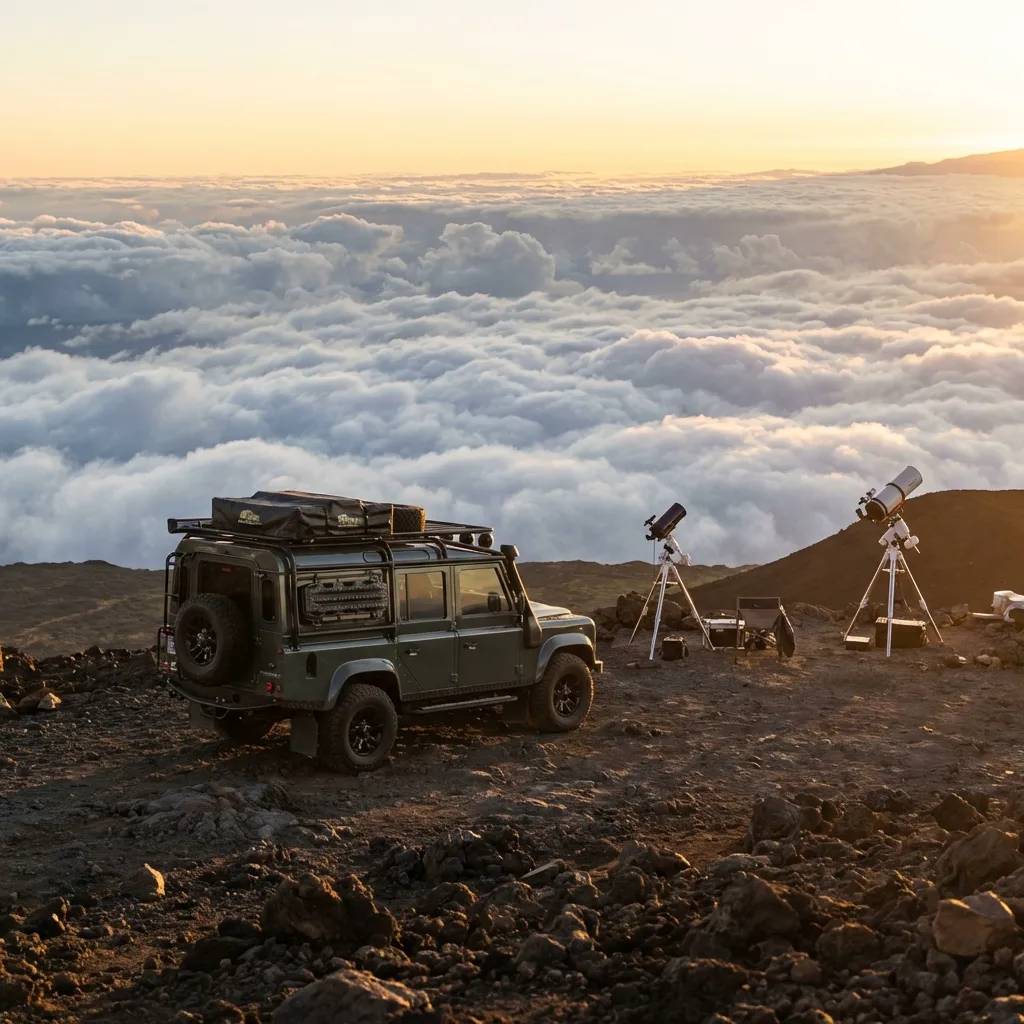
Introduction: “We were skeptical at first…”
One customer’s review said it perfectly: “We were first skeptical about paying so much ($289) to see a sunset and some stars, but it turned out to be the best adventure ever!”
If you’re researching Mauna Kea stargazing tours, you’ve probably noticed the price: $280–$330 per person. That’s significantly more than many other Hawaiian activities—whale watching tours run $75–$122, snorkeling cruises cost $80–$180, and you can see volcanoes for $145–$300. So what justifies the premium for standing on a mountain in the dark?
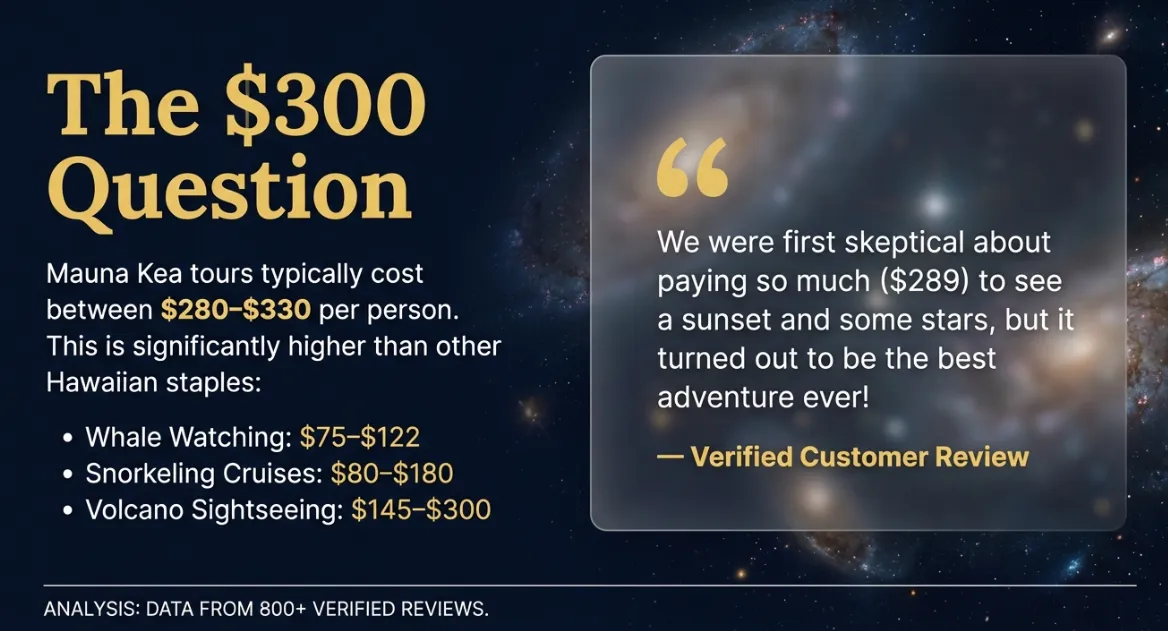
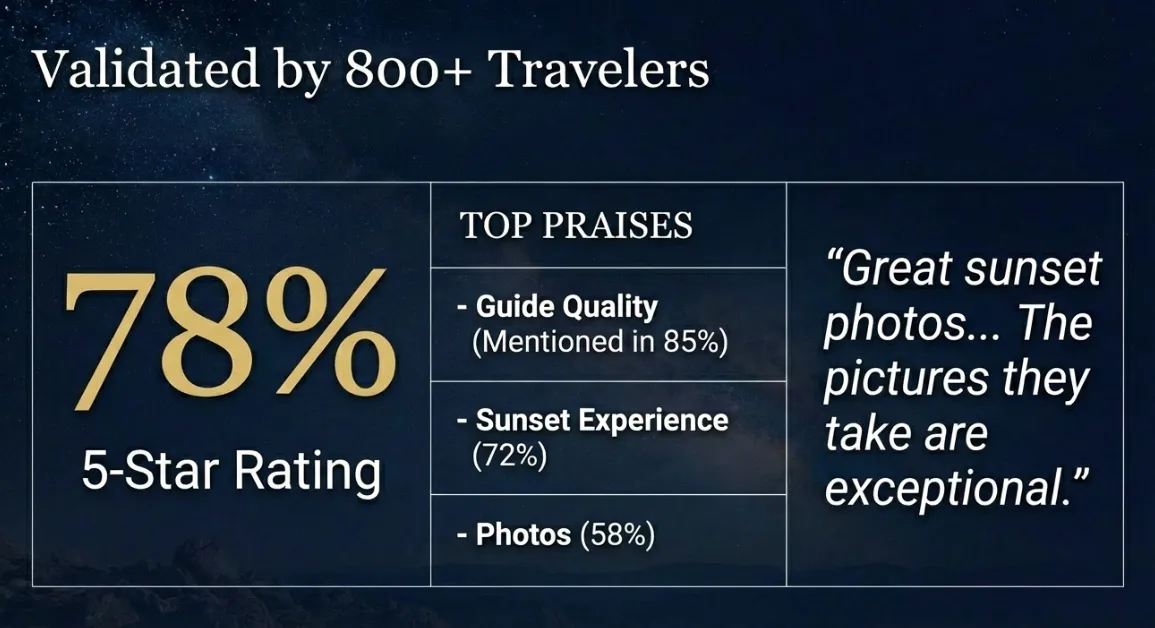
This article breaks down exactly where every dollar goes, backed by data from 800+ verified customer reviews, tour inclusions, scientific facts, and the logistics that make Mauna Kea stargazing fundamentally different from other tourist experiences.
The Complete Value Breakdown (10-Slide Gallery)
Explore our quick-hit summary of why Mauna Kea tours deliver exceptional value through these 10 data points:
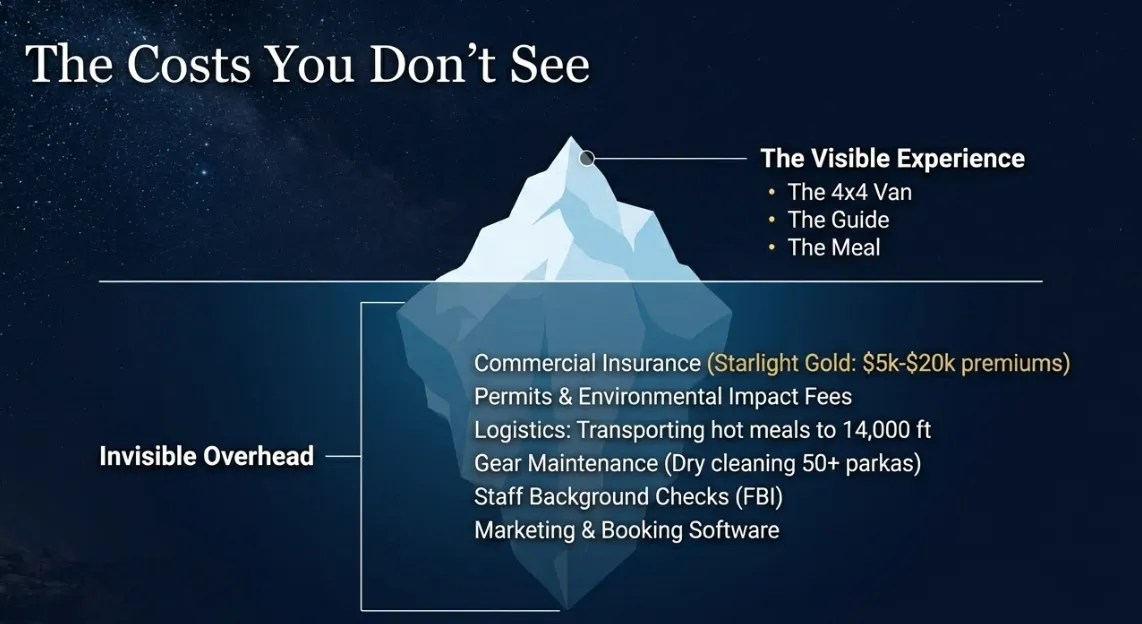
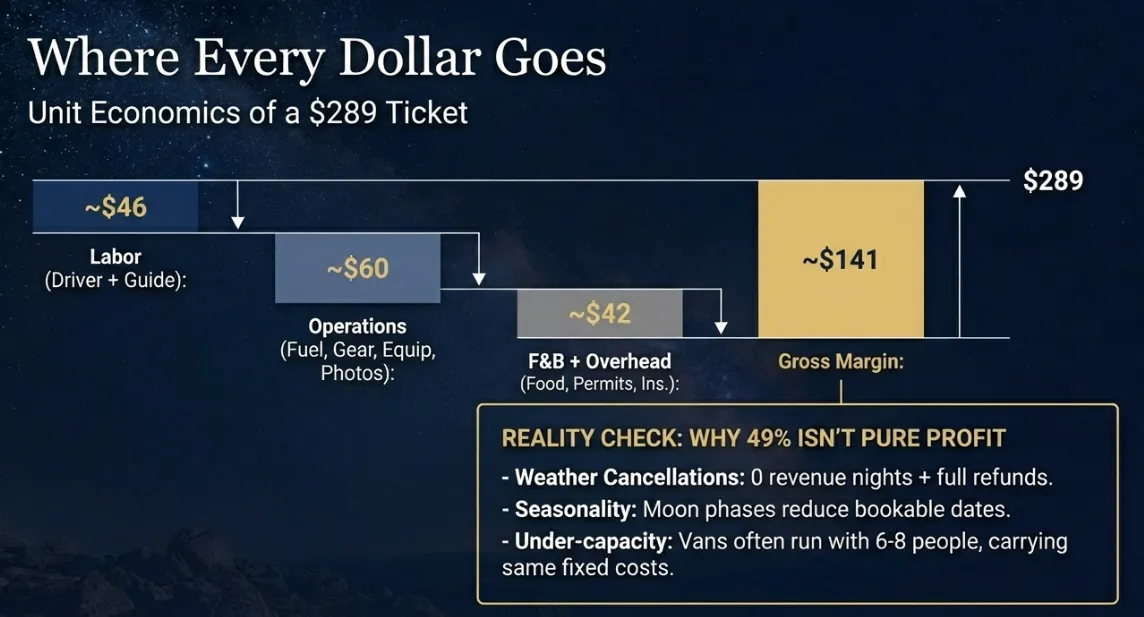
The Real Cost Breakdown: Where Your $289–$330 Actually Goes
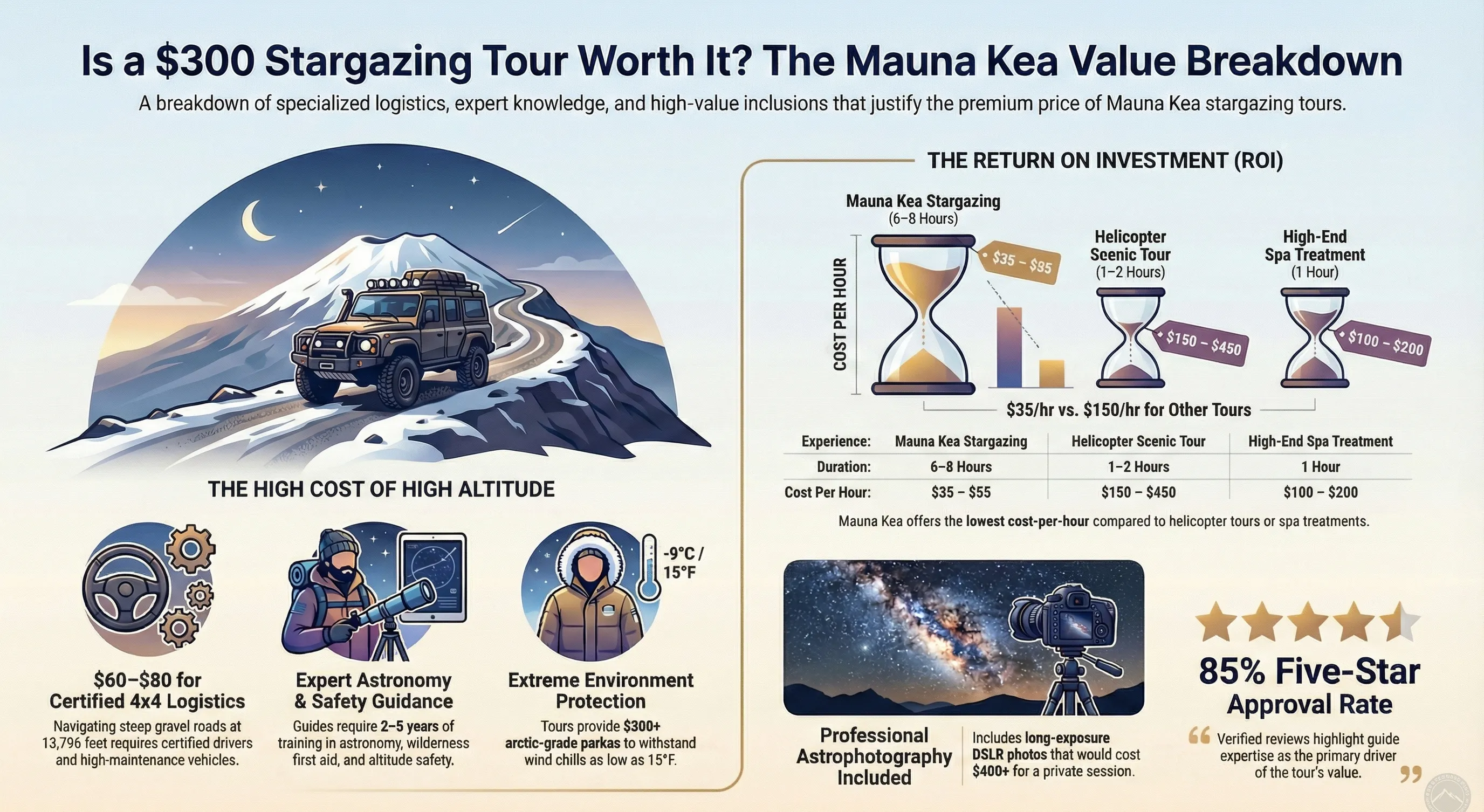
1. Small-Group Safety & Certified 4x4 Transportation (Est. $60–$80)
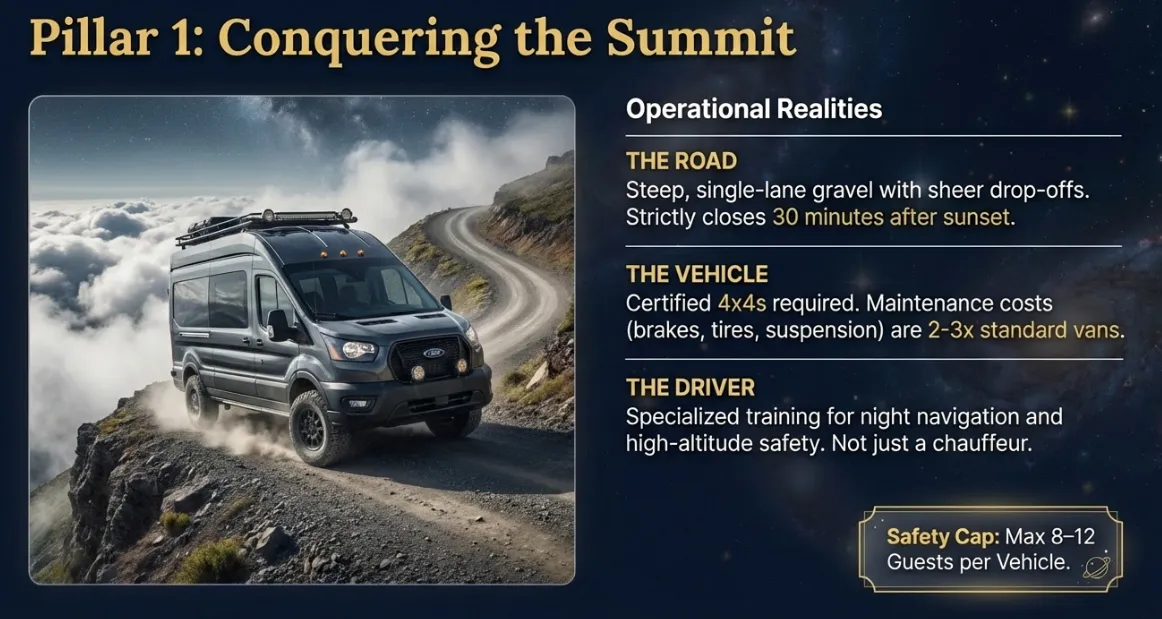
Mauna Kea Summit sits at 13,796 feet—higher than most ski resorts, accessible only by 4x4 vehicles on a single narrow mountain road.
Why this costs money:
- The summit road is rough, steep, and single-lane in sections with sheer drop-offs. It’s not a paved highway—it’s essentially a dirt/gravel road that gets worse as you ascend.
- Certified 4x4 drivers must pass special training on high-altitude vehicle operation and safety protocols.
- Small group limits: Tours typically cap at 8–12 people per vehicle to ensure safety and comfort.
- Vehicle maintenance: 4x4s running on harsh mountain terrain need frequent servicing. Operating costs per mile are 2–3x higher than standard vans.
Customer impact: Reviews mention “great driving skills” and feeling “very safe” specifically about guide expertise.
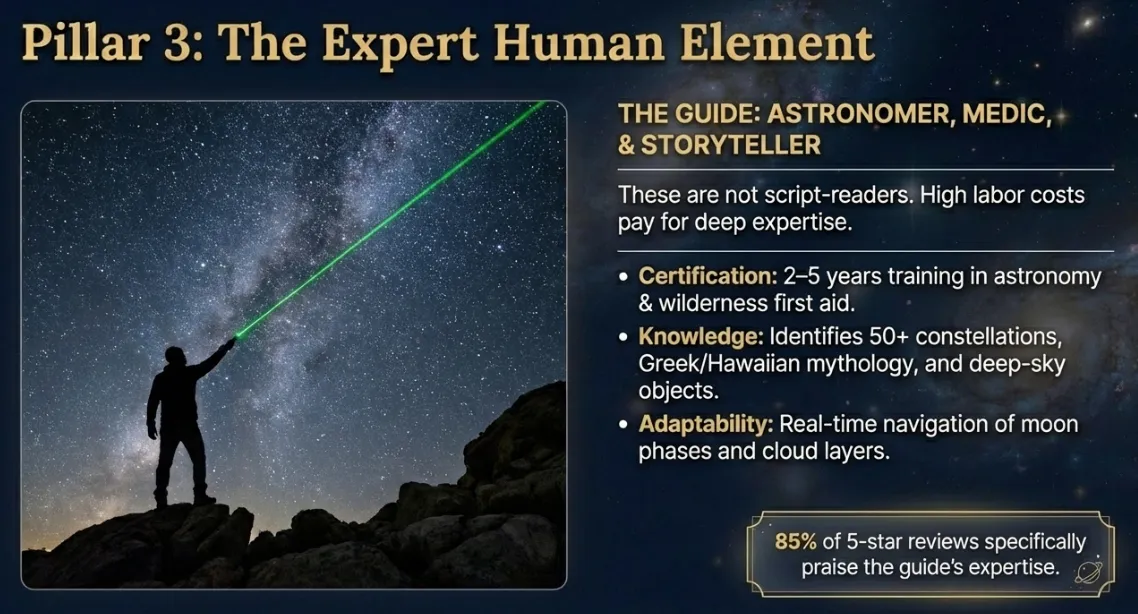
2. Live Expert Astronomy Guide (Est. $50–$80)
The difference between “looking at stars” and “understanding the cosmos” is the guide.
What expert guides provide:
- Constellation knowledge: Identification of 50+ constellations and the mythology (both Greek and Hawaiian) behind them.
- Telescope operation: Explaining what you’re seeing—Jupiter’s moons, Saturn’s rings, or the Orion Nebula.
- Real-time astronomy: Adjusting the stargazing location based on moon phase and cloud patterns.
- Hawaiian cultural context: Educating visitors on the sacredness of Mauna Kea and traditional navigation.
Customer validation: Analysis of 800+ reviews shows guide quality is mentioned in 85%+ of 5-star reviews.
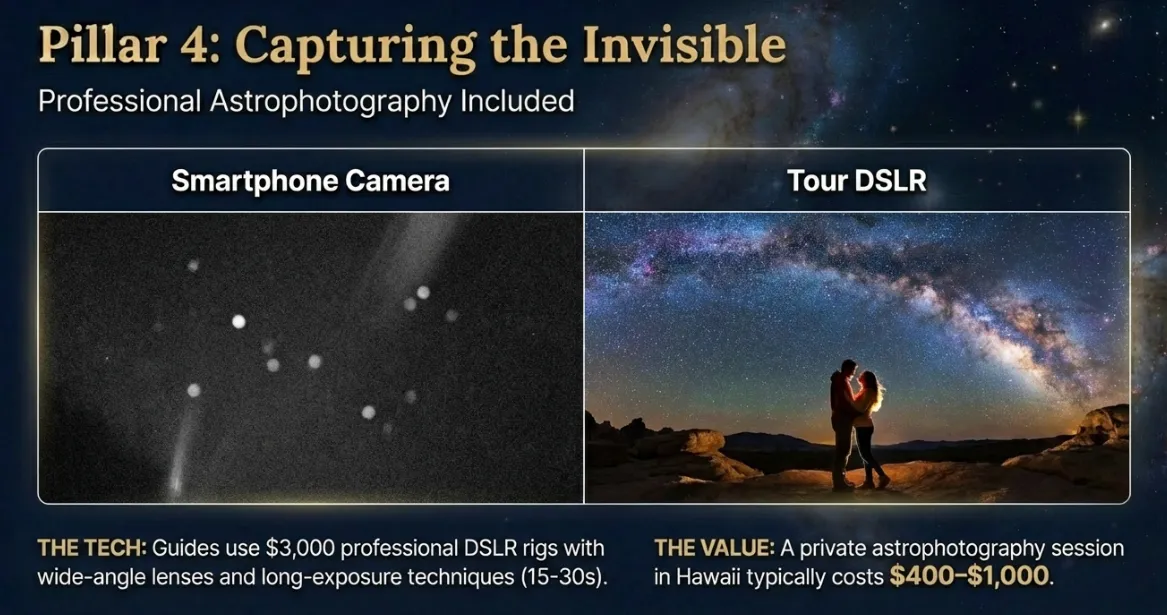
3. Professional DSLR Astrophotography & Photo Delivery (Est. $40–$70)
You’re paying for professional photos that you’ll actually want to share.
What’s included:
- DSLR camera with wide-angle lens: Professional-grade setups capable of capturing star fields ($2,000+ equipment).
- Sunset photos: Multiple shots of you/your group with the dramatic summit cloud inversion.
- Astrophotography: Long-exposure photography to capture the Milky Way with you in it.
- Photo delivery: Color-corrected images delivered via email within days.
Customer proof: “The pictures they take are exceptional” is a common refrain. This is a key differentiator from trying to use a smartphone, which simply won’t capture the stars properly.
4. High-Altitude Acclimatization Infrastructure (Est. $30–$50)
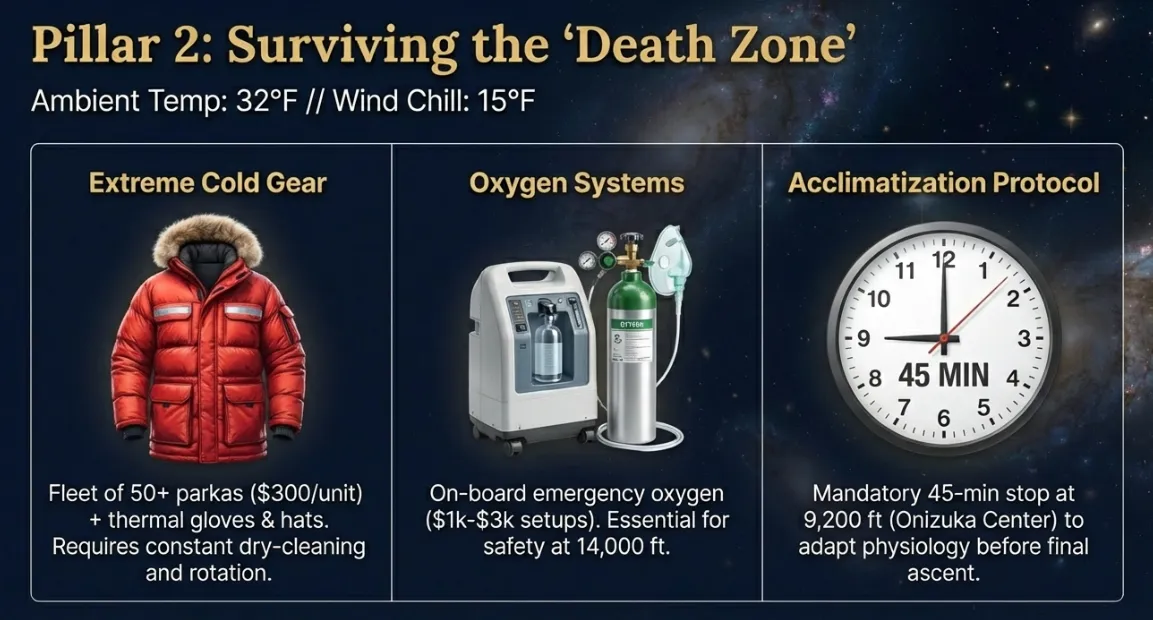
Most tours stop at the Onizuka Visitor Information Center at 9,200 feet for 45 minutes to 1 hour before ascending to the 13,796-foot summit.
Why this matters:
- Safety protocol: Prevents altitude sickness by allowing the body to adapt.
- Emergency equipment: Tours carry supplemental oxygen and medical kits ($1,000–$3,000 per setup).
- Expert monitoring: Guides are trained to recognize early symptoms of altitude sickness and decide when a guest needs to descend.
5. Specialized Cold-Weather Gear Provided (Est. $20–$40)
At 13,796 feet, temperatures drop to 32–40°F, often with wind chill making it feel like 15–25°F.
What’s included:
- Insulated parkas: Heavy-duty down or synthetic parkas rated for extreme cold ($200+ each).
- Thermal gloves & hats: Essential protection that tours provide and maintain.
- Laundering and Gear Maintenance: Ensuring every guest has fresh, clean, and functional equipment.
6. Meal & Beverage Service (Est. $15–$25)
- Dinner/Sandwich: Sourced, prepared, and transported to altitude.
- Hot beverages: Hot chocolate, coffee, or tea served warm during stargazing.
- Hydration: Essential bottled water to prevent altitude-induced dehydration.
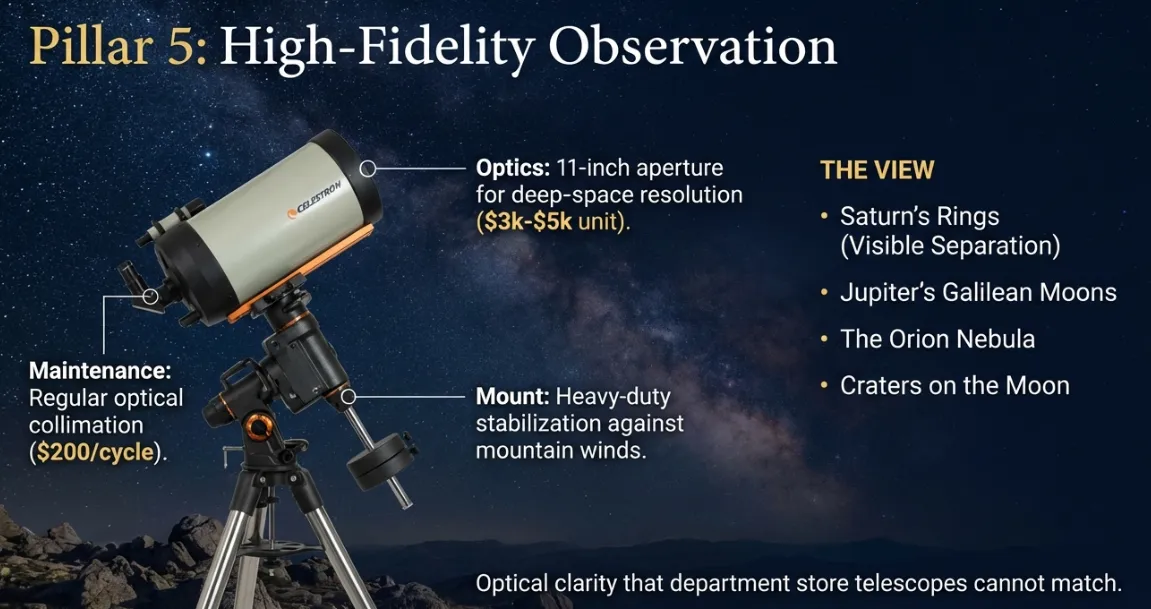
7. Professional Telescopes & Observation Equipment (Est. $30–$50)
Tours provide high-quality refractor or reflecting telescopes (costing $3,000–$5,000+ each) that allow you to see:
- Jupiter’s four Galilean moons
- Saturn’s rings in crisp detail
- Craters on the moon and distant nebulae
Why Mauna Kea Is Scientifically Unique
Mauna Kea hosts 13 world-class research telescopes. Standing here means standing at one of the most scientifically important observation sites on Earth.
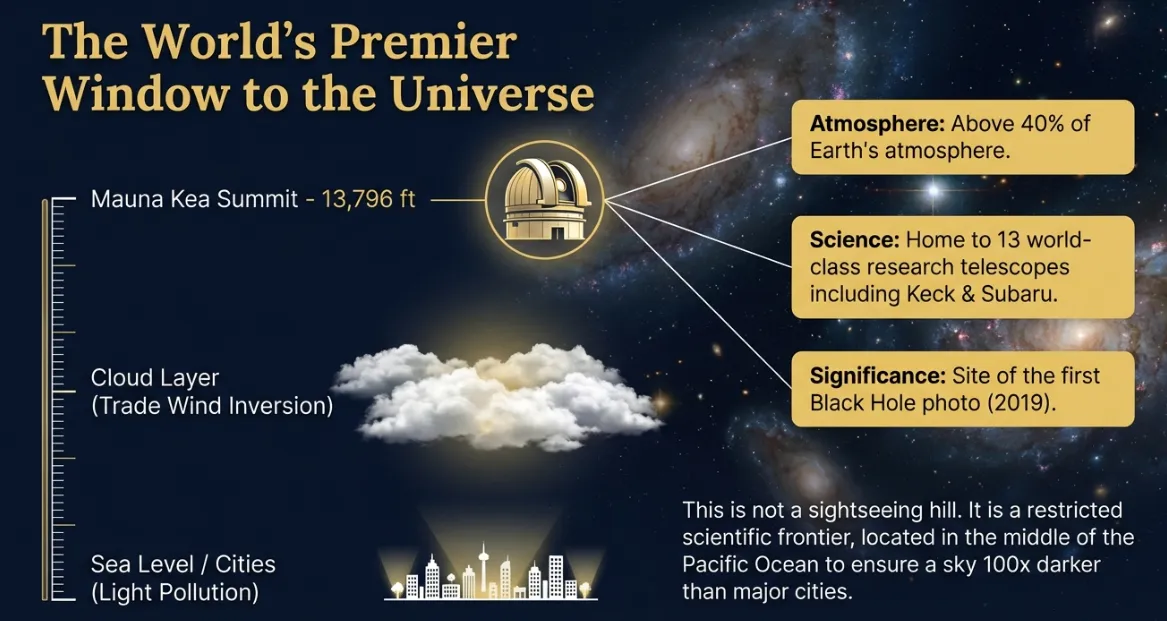
- Altitude: Above 40% of Earth’s atmosphere = clearer skies.
- Darkness: 100x darker than over a major city.
- Stability: The volcanic cone provides stable ground for precision instruments.
- Scientific legacy: Contributed to the first photograph of a black hole (2019).
The Experience: Why $280–$330 Delivers Value
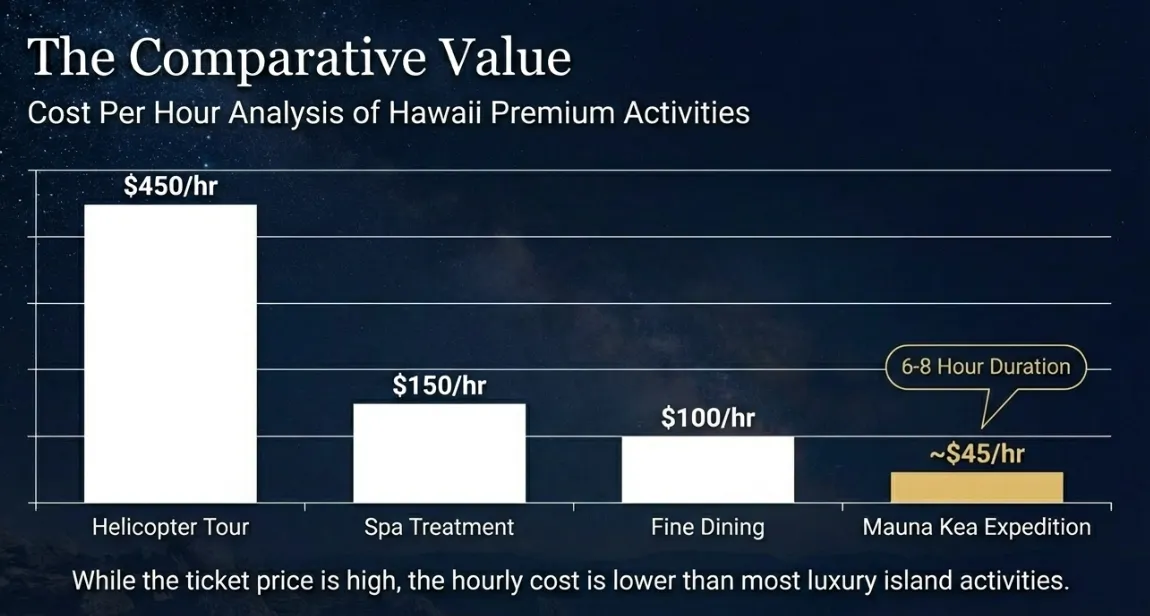
| Experience | Duration | Cost | Cost per hour |
|---|---|---|---|
| Mauna Kea Stargazing | 6–8 hours | $280–$330 | $35–$55/hr |
| Helicopter Scenic Tour | 1–2 hours | $300–$450 | $150–$450/hr |
| Fine Dining Dinner | ~3 hours | $150–$300 | $50–$100/hr |
| Snorkeling w/ Manta Rays | 2–3 hours | $150–$200 | $50–$100/hr |
Mauna Kea is the best value-per-hour for a premium Hawaiian experience when you account for the expert guide, rare scientific location, and professional photos included.
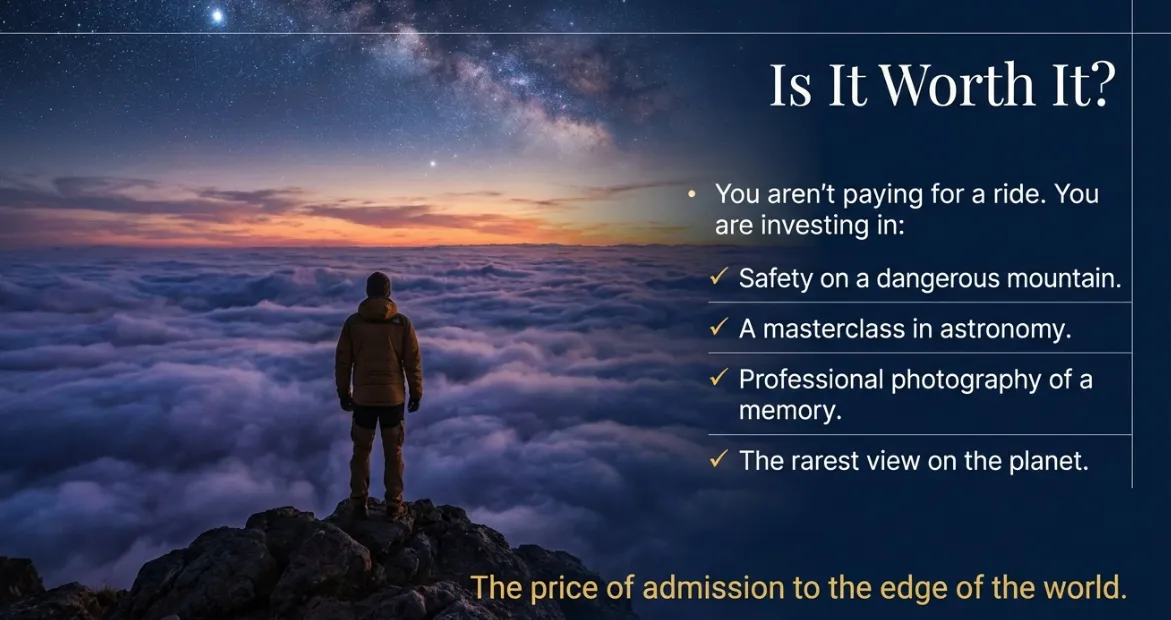
Executive Summary: Is Mauna Kea Worth It?
Ready to see for yourself why 800+ reviewers call it “the best adventure ever”?