Planning your Mauna Kea stargazing adventure requires knowing where to go, when to visit, and how to access the mountain safely. This comprehensive guide covers everything from finding the best location maps to understanding seasonal weather patterns and road closure schedules.
Whether you’re looking for public stargazing areas around the Visitor Information Station, trying to plan your visit during the clearest months, or checking summit access restrictions, you’ll find all the essential information here—including our interactive location map showing all major viewing spots and observatories.
Interactive Mauna Kea Stargazing Locations Map
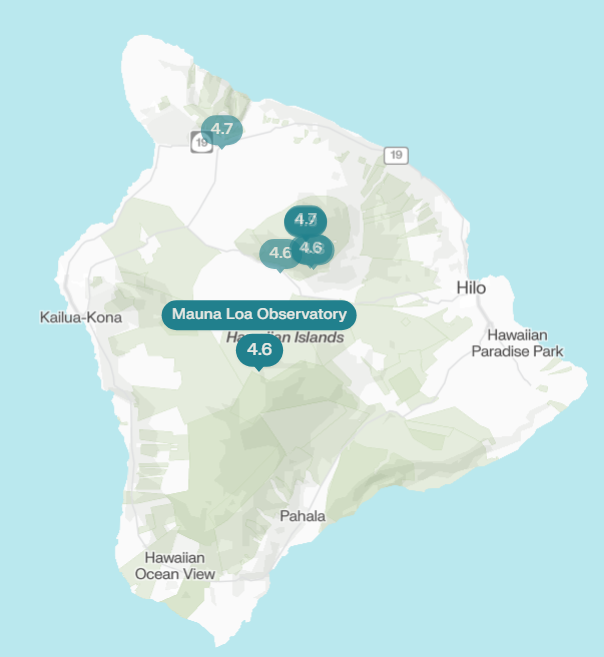
Click here to explore the full interactive map →
Our interactive map features:
- 9 key stargazing locations including observatories, visitor centers, and tour departure points
- Detailed ratings (4.6-4.9 stars) from thousands of visitor reviews
- GPS coordinates for navigation
- Facility information for each location
- Direct booking links for tours
Mauna Kea Stargazing Location Maps
The main public stargazing area on Mauna Kea is around the Maunakea Visitor Information Station (VIS) at Hale Pōhaku (approximately 9,200 feet elevation), with additional maps available for the summit observatory area.
Best Maps for Stargazing Visitors
University of Hawaiʻi Hilo Maunakea Maps:
- The official University of Hawaiʻi Hilo Maunakea site hosts perspective maps of Maunakea, including the Hale Pōhaku/VIS area
- These maps show the access road, visitor facilities, and astronomy precinct
- Most relevant for locating safe public viewing areas rather than restricted observatory sites
- Available as high-resolution images for offline use and trip planning
- Show parking areas and walking zones around the VIS for after-dark viewing
How to Use These Maps:
- Download high-resolution versions before your trip (cell service is limited on the mountain)
- Identify the VIS parking area (capacity for 100+ vehicles)
- Locate designated stargazing spots near the Visitor Information Station
- Plan your route from the main access road
Summit and Observatory Maps
Several detailed summit and observatory maps exist, but they serve different purposes than public stargazing planning:
What Summit Maps Show:
- Telescope locations and observatory domes
- Summit roads and parking areas
- Restricted research facility boundaries
- Elevation contours and volcanic features
Why They’re Limited for Stargazing:
- The summit area closes to the general public 30 minutes after sunset
- These maps are primarily for showing observatory positions, not public viewing spots
- Most stargazing activity occurs at the VIS, not at the summit
Available Summit Map Resources:
- Maunakea Observatories summit map PDFs
- Online ArcGIS observatory map experience
- Useful for understanding mountain layout and daytime summit visits
- Show the steep summit road that requires 4WD vehicles
Where People Actually Stargaze on Mauna Kea
Current guidance emphasizes stargazing from around the Visitor Information Station for several important reasons:
Maunakea Visitor Information Station (VIS) at Hale Pōhaku
Elevation: 9,200 feet
Why the VIS is the Primary Stargazing Location:
- Sits above much of the cloud layer for clear views
- Parking for 100+ vehicles with safe, designated areas
- Monthly reservation-only telescope programs at designated nearby viewing site
- Free nightly stargazing programs (weather permitting) with volunteer astronomers
- Accessible via paved road—any vehicle can reach it
- Restroom facilities available
- No extreme altitude concerns compared to the summit
Public Programs:
- Free stargazing every clear night starting after sunset
- Volunteer astronomers set up telescopes
- Educational programs about Hawaiian star navigation and modern astronomy
- No reservation required for general stargazing (reservations only for special telescope programs)
Why Not the Summit?
Summit Restrictions:
- Closed to public 30 minutes after sunset
- Requires 4WD vehicles for the steep, unpaved upper road
- Extreme altitude (13,796 feet) poses health risks
- No facilities or services
- Organized stargazing tours view from the summit at sunset, then descend to mid-level for nighttime viewing
Summit vs. VIS Stargazing Quality:
- The VIS at 9,200 feet provides nearly identical stargazing quality as the summit
- Well above sea-level light pollution and most atmospheric interference
- More comfortable and accessible than summit conditions
- All DIY viewing with personal telescopes focuses on the VIS area
Getting Coordinates for GPS
VIS Coordinates:
- Latitude: 19.7601° N
- Longitude: -155.4563° W
Loading into Google Maps:
- Search for “Mauna Kea Visitor Information Station” or use coordinates
- Shows the access road from Saddle Road (Highway 200)
- Driving time from Kona: 1.5-2 hours
- Driving time from Hilo: 1-1.5 hours
Explore all locations on our interactive map →
Best Time of Year for Stargazing at Mauna Kea
Mauna Kea offers exceptional stargazing year-round due to its high elevation, dry air, and low light pollution, but optimal conditions vary by weather patterns and moon phases.
Dry Season Priority (April - October)
Why This Period is Best:
- Clearest skies with minimal cloud cover
- Lowest rainfall across the season
- Prime conditions for vivid Milky Way views
- Best for photographing faint deep-sky objects
- Warmer temperatures (still cold at elevation—30-40°F at VIS)
What You’ll See:
- Milky Way overhead during evening hours (summer months)
- Exceptional views during new moon periods
- Planets visible depending on seasonal positions
- Star clusters, nebulae, and galaxies
Planning Tips:
- Book tours 2-4 weeks in advance (popular season)
- Target new moon dates for darkest skies
- Later sunset times mean stargazing starts later (around 8-9 PM)
Winter Highlights (December - February)
Winter Advantages:
- Some of the calmest trade winds
- Lowest humidity for exceptionally sharp views
- Brilliant winter constellations (Orion, Pleiades, Taurus)
- Earlier darkness means earlier stargazing sessions
- Fewer tourists except during holidays
Winter Challenges:
- Occasional snow at summit (can close upper roads)
- Colder temperatures (15-30°F at VIS, below freezing at summit)
- Higher chance of clouds on some nights
- Potential weather-related tour cancellations
What You’ll See:
- Orion Nebula in stunning detail
- Pleiades star cluster
- Winter Milky Way (fainter than summer core but still spectacular)
- Bright winter stars like Sirius and Betelgeuse
Moon Phase and Timing Tips
New Moon Periods (Best):
- Darkest skies for faint objects
- Milky Way visible in full glory
- Nebulae and galaxies stand out
- Tours often book up fastest during new moon
Quarter Moon:
- Still excellent stargazing
- Moonlight helps with navigation and safety
- Great for viewing the Moon’s craters and features through telescopes
- Balance between dark sky and useful illumination
Full Moon:
- Bright moonlight washes out faint objects
- Still see bright planets and stars
- Excellent for lunar observation through telescopes
- Some tours may reschedule guests to darker nights
Optimal Viewing Window:
- After sunset, once twilight fades (30-60 minutes)
- Public programs at VIS begin after dark
- Tours typically operate 7:00 PM - 10:00 PM
When is Mauna Kea Least Cloudy to Maximize Stargazing
May and April stand out as the months with the least cloud cover on Mauna Kea, maximizing your chances of clear nights for stargazing.
Seasonal Cloud Patterns
Dry Season (April - October):
- Lowest precipitation and cloud formation overall
- May often cited for stable, high-pressure systems
- Weather patterns keep skies above the inversion layer mostly clear
- Trade winds blow clouds below the VIS elevation
Why May is Exceptional:
- Peak of dry season stability
- Minimal rainfall risk
- Consistent high-pressure systems over Hawaii
- Clouds typically stay below 6,000-8,000 feet
- VIS at 9,200 feet sits above the cloud layer
Monthly Standouts for Clear Skies
Top 3 Clearest Months:
- May - Most stable weather, lowest cloud cover, minimal rain
- April - Transition into dry season, excellent conditions
- October - End of dry season, low precipitation risk, moderate winds
Also Excellent:
- June-September - Consistent dry conditions, though summer can bring occasional afternoon clouds
- March - Transitional month with clearing weather before spring
More Variable:
- November-February - Winter brings more cloud potential and precipitation
- December-January - Highest chance of summit snow and clouds, though still many clear nights
Understanding the Inversion Layer
How It Benefits Stargazing:
- Clouds typically form below 6,000-8,000 feet elevation
- VIS at 9,200 feet sits above this cloud layer
- You can often watch sunset above a “sea of clouds”
- Even on partly cloudy days at sea level, the VIS may have clear skies
What This Means for Visitors:
- Don’t cancel your trip based on coastal weather
- Check Mauna Kea-specific forecasts
- Tour operators monitor conditions at elevation, not just Kona/Hilo weather
Best Practices for Maximizing Clear Skies
Booking Strategy:
- Choose April, May, or October if you have flexibility
- Target new moon dates within these months for optimal conditions
- Book multiple days if possible (weather backup)
- Most tours offer free cancellation/rescheduling for weather
Pre-Trip Monitoring:
- Check the Mauna Kea Weather Center forecast
- Monitor cloud cover predictions specifically for 9,000+ feet elevation
- Look for clear, stable high-pressure systems
- Tour operators will cancel if conditions are unsafe or too cloudy
Seasonal Restrictions and Road Closures for Summit Access
Mauna Kea summit access faces seasonal road closures primarily due to winter weather. There are no blanket seasonal bans, but frequent weather-driven restrictions occur throughout the year.
Winter Closures (October - April)
Peak Risk Period:
- December to March sees the highest closure risk
- Snow probability peaks at 50-60% during these months
- Ice formation on the steep summit road
- High winds (often over 40 mph) create dangerous driving conditions
What Triggers Closures:
- Snowfall accumulation on the unpaved upper road
- Ice patches that make 4WD driving unsafe
- Wind speeds exceeding safe limits
- Low visibility from storms or clouds
- Combination of factors (wind + snow + ice)
How Long Closures Last:
- Can be hours, days, or occasionally weeks
- Depends on when crews can safely clear snow and ice
- Weather must stabilize before reopening
- No fixed schedule—conditions dictate reopening
Impact on Visitors:
- Summit sunset tours may cancel
- VIS at 9,200 feet typically remains accessible (paved road)
- Stargazing programs at VIS continue during summit closures
- Tours reschedule or offer full refunds
Check Current Status Before Your Visit
Real-Time Information:
- Mauna Kea Weather Center - Official summit road status page
- Updated multiple times daily
- Shows current conditions and road status
- Provides forecast for upcoming days
What to Check:
- Current road status (Open/Closed/Restricted)
- Weather forecast at summit elevation
- Wind speed predictions
- Snow probability
- Sunrise/sunset times
Do NOT rely on:
- Kona or Hilo coastal weather forecasts
- General Big Island conditions
- Assumptions based on clear skies at sea level
Other Access Restrictions
Year-Round Rules:
Sunset Closure:
- Public access prohibited 30 minutes after sunset
- Applies to everyone, not just vehicles
- Safety and cultural respect reasons
- Stargazing happens at VIS, not summit, after dark
4WD Requirement:
- Mandatory for the unpaved upper summit road (above VIS)
- Any vehicle can reach the VIS via paved road
- Most rental car contracts prohibit Mauna Kea driving
- Tours provide proper 4WD vehicles and experienced drivers
Age Restrictions:
- Summit typically restricted to ages 16+
- Lower-elevation VIS stargazing welcomes all ages
- Health screening recommended for anyone with respiratory/heart conditions
Temporary Closures:
Beyond Weather:
- Cultural ceremonies or events
- Construction or maintenance work
- Emergency situations
- Occasional protests (rare but can block road access)
No Fixed Schedule:
- These closures announced as they occur
- Check official sources before departing
- Tour operators monitor and communicate with guests
Planning Around Restrictions
Best Practices:
For Independent Visits:
- Check road status that morning
- Have a backup plan (VIS is always accessible)
- Understand that summit is daytime/sunset only
- Plan stargazing at the VIS regardless of summit access
For Guided Tours:
- Operators monitor conditions constantly
- Will contact you if tour must cancel/reschedule
- Most offer flexible cancellation policies
- Experienced guides know safe conditions
Seasonal Awareness:
- Summer (June-September): Fewest closures, most reliable access
- Fall (October-November): Transitional, occasional closures begin
- Winter (December-March): Expect frequent closures, plan flexibility
- Spring (April-May): Improving conditions, decreasing closure risk
Book Your Mauna Kea Stargazing Experience
Now that you know where to go, when to visit, and how to check access conditions, it’s time to plan your adventure.
Recommended Tours
For the Complete Experience:
Mauna Kea Summit and Stars Adventure
- Summit sunset above the clouds (weather permitting)
- Descent to mid-level for professional telescope stargazing
- Expert astronomy guides
- All warm gear, equipment, dinner included
- $289-315 per person | Ages 13+ | 8 hours
For Families with Younger Children:
Lower-Elevation Stargazing Tours
- Welcome all ages
- Shorter duration (2-6 hours)
- Professional telescopes and guides
- Same spectacular night sky without extreme altitude
- $229-259 per person
Independent Stargazing at VIS
Free Nightly Programs:
- No reservation required
- Volunteer astronomers with telescopes
- Every clear night after sunset
- Drive yourself (any vehicle on paved road)
- View VIS location on interactive map →
How to Book
Direct Booking:
Booking Timeline:
- Reserve 2-4 weeks in advance
- Peak seasons (April-May, summer, holidays) book fastest
- Most tours offer free cancellation 24-48 hours ahead
- Weather cancellations receive full refund or rescheduling
Plan Your Perfect Mauna Kea Stargazing Visit
With detailed location maps, knowledge of the clearest months, and understanding of access restrictions, you’re fully prepared to experience Mauna Kea’s world-class stargazing. Whether you choose a guided summit tour or the free programs at the Visitor Information Station, you’ll witness night skies that most people never imagine possible.
Remember:
- Best months: April, May, October for clearest skies
- Where to go: Visitor Information Station at 9,200 feet
- Check conditions: Mauna Kea Weather Center before departing
- Book early: 2-4 weeks advance for tours during peak season
Ready to explore Mauna Kea’s stargazing locations?