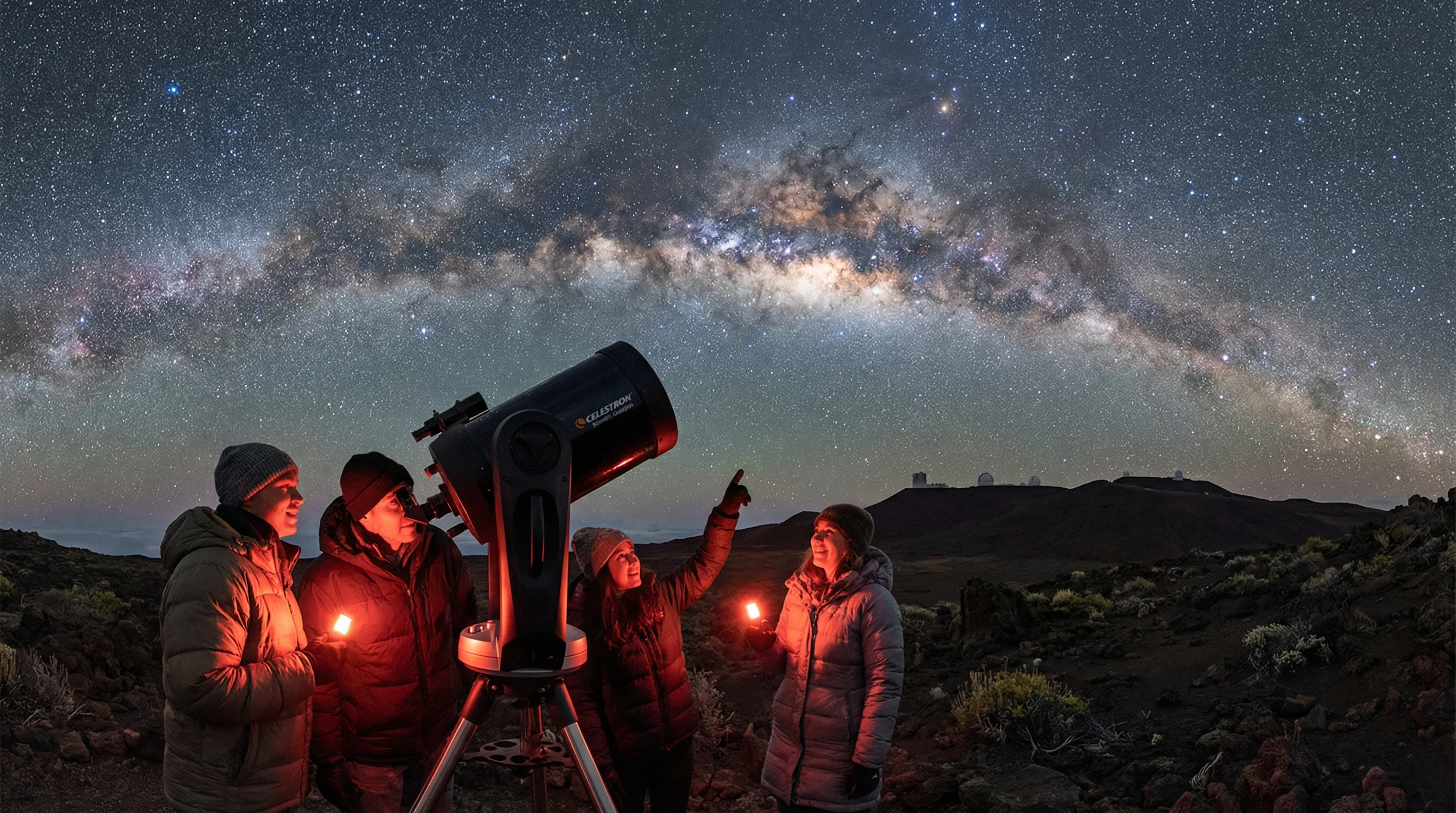
Planning your first stargazing adventure on Mauna Kea can feel overwhelming. At 13,796 feet above sea level, this dormant volcano offers some of Earth’s clearest views of the cosmos—but the high altitude, remote location, and specialized equipment requirements raise important questions for first-time visitors.
This comprehensive guide answers everything beginners need to know about Mauna Kea stargazing tours: how to choose the right tour, what to expect, what to bring, how much it costs, and how to prepare for an unforgettable night under Hawaii’s darkest skies. Whether you’re traveling solo, with teens, or bringing the whole family, you’ll find the information you need to make your first Mauna Kea experience safe, comfortable, and absolutely magical.
We’ll cover choosing your tour operator, understanding costs and value, preparing for high altitude, logistics and booking, and practical tips from experienced guides—everything to help you confidently book and enjoy your first Mauna Kea stargazing adventure.
Why Mauna Kea Is the World’s Premier Stargazing Destination
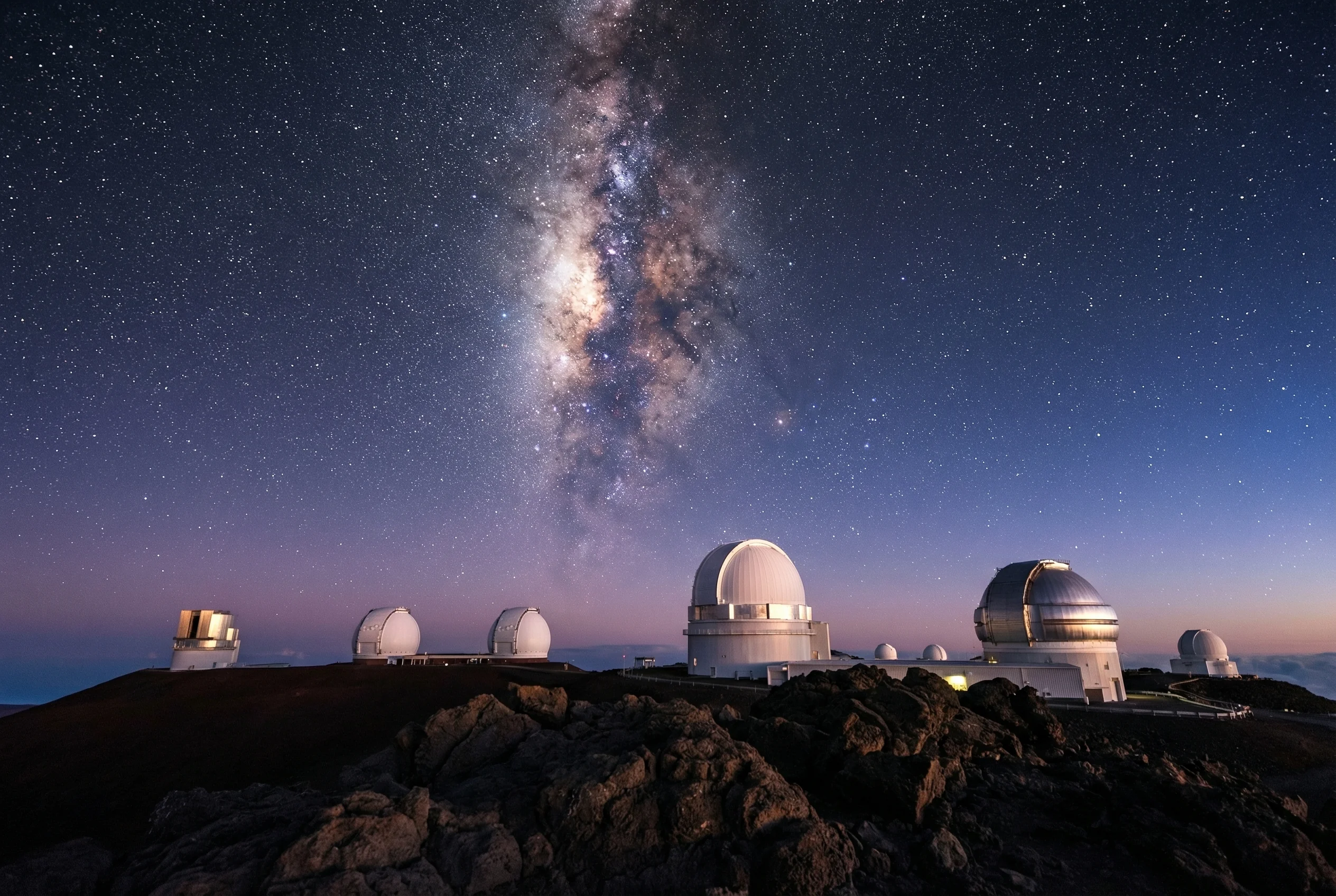
Mauna Kea stands as one of Earth’s best locations for astronomical observation, which is why 13 countries have built world-class research telescopes on its summit. The mountain’s unique combination of high altitude (above 40% of Earth’s atmosphere), extremely stable air, minimal light pollution, and over 300 clear nights per year creates unparalleled viewing conditions.
At the summit, you’re literally above most of the water vapor and atmospheric turbulence that obscures celestial objects from sea level. The Milky Way appears as a brilliant river of stars stretching across the sky, planets reveal surface details, and distant galaxies become visible through even modest telescopes.
For first-time stargazers, this means you don’t need any astronomy background to have a profound experience. The clarity is so exceptional that even complete beginners are awestruck by what they can see with their naked eyes—and through professional telescopes, the views are simply extraordinary.
The island’s isolation in the Pacific Ocean, combined with strict light pollution ordinances on the Big Island, ensures dark skies rarely found elsewhere on Earth. This isn’t just “better than city stargazing”—it’s a completely different universe.
Choosing Your First Mauna Kea Stargazing Tour
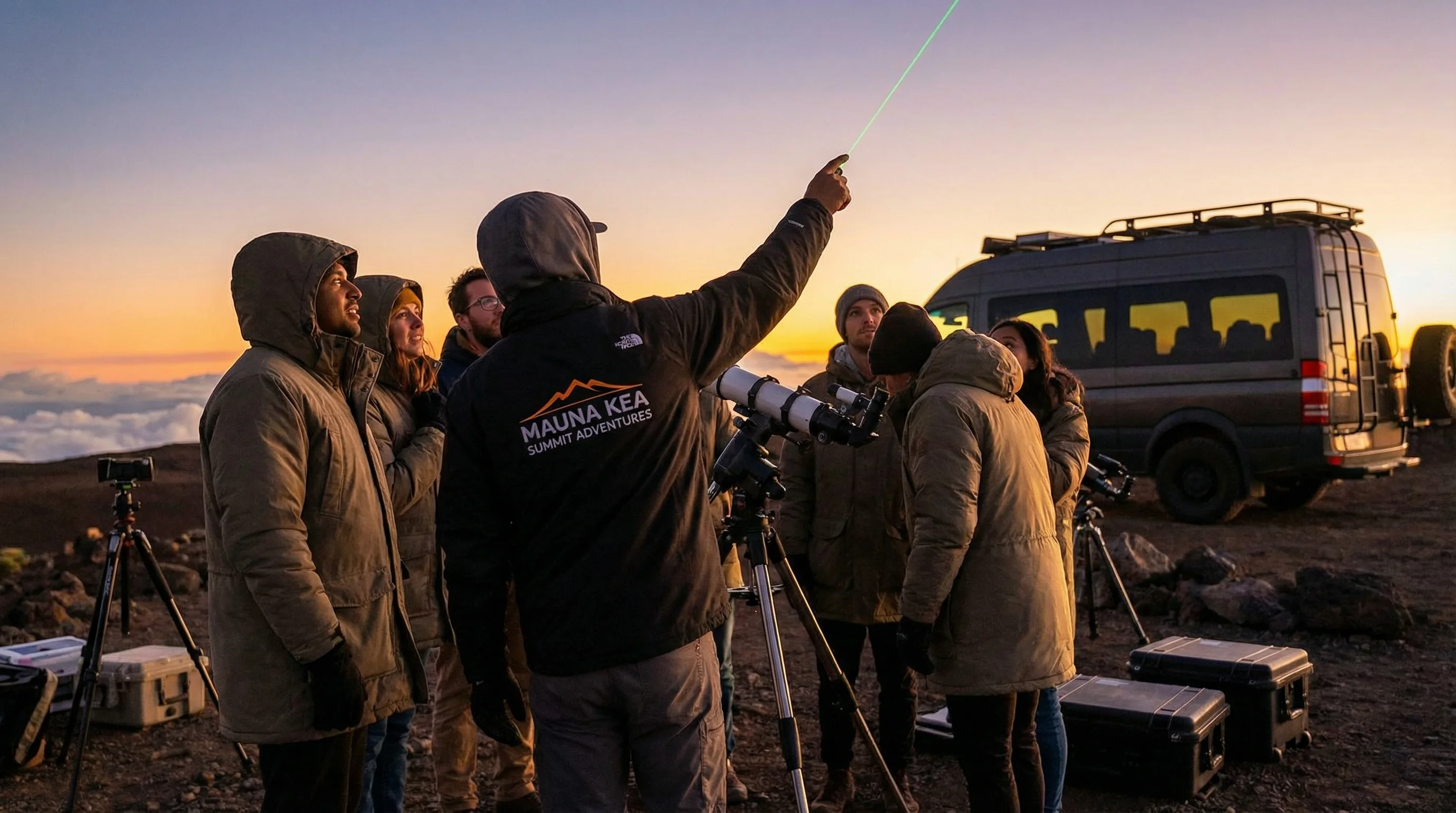
For first-timers, choosing the right tour operator makes all the difference. Several reputable companies offer guided stargazing tours, each with different approaches to altitude, duration, and group size. Here’s what you need to know to make the best choice for your first experience.
Summit Tours vs. Lower-Elevation Stargazing
The most important decision is whether to visit the 13,796-foot summit or stargaze at lower elevations (6,000-9,200 feet).
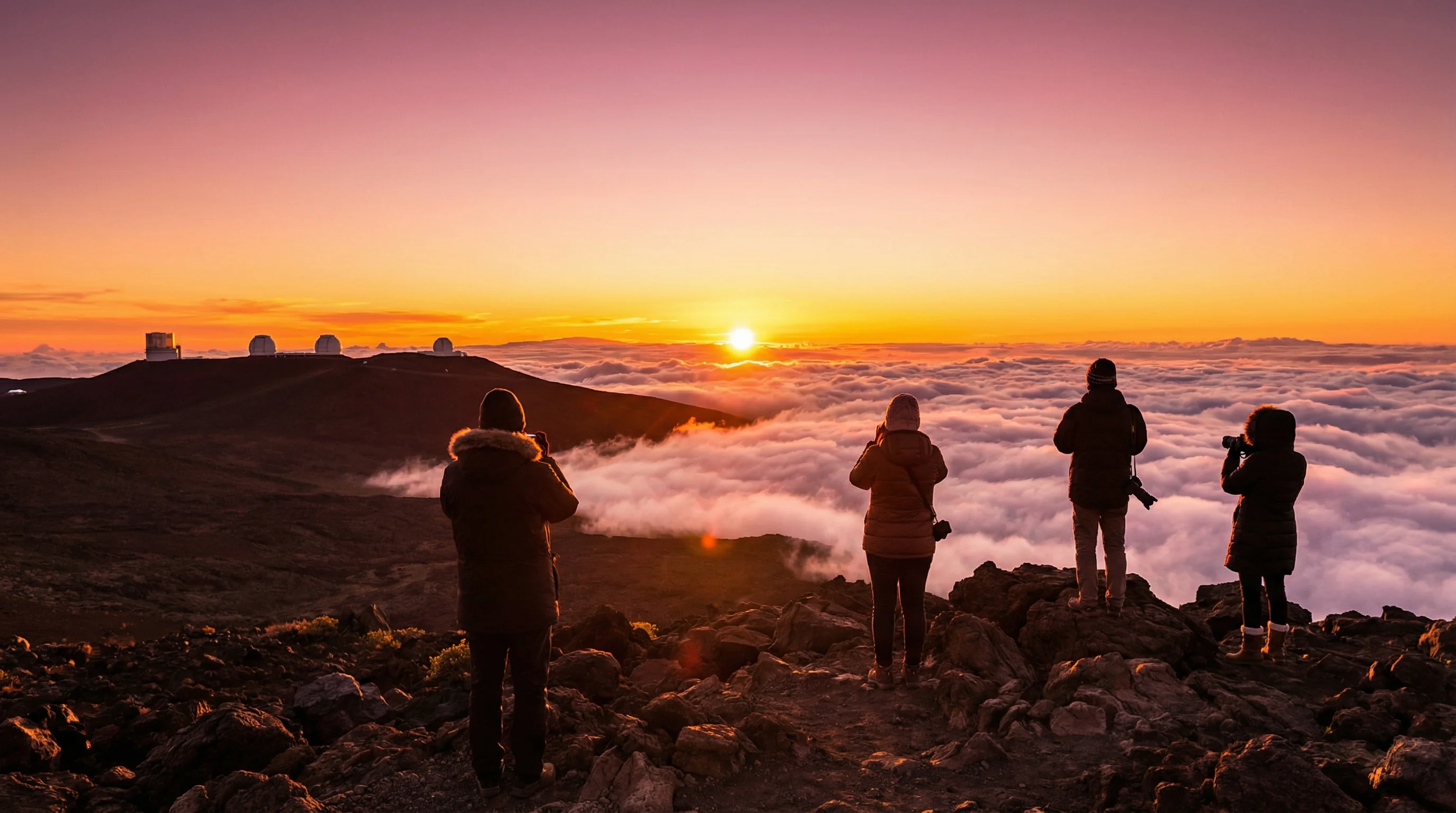
Summit sunset and stargazing tours take you to the very top of Mauna Kea for sunset above the clouds, then descend to around 9,200 feet for stargazing. These tours offer the most dramatic experience—watching the sun set above a sea of clouds with NASA’s observatories surrounding you is genuinely unforgettable. Most summit tours last 7-8 hours and include transportation, warm gear, dinner, and telescope viewing.
Lower-elevation stargazing tours skip the summit entirely, focusing instead on professional telescope viewing under dark skies at mid-mountain locations. These tours are typically shorter (2-6 hours), avoid extreme altitude, and often welcome children of all ages. The stargazing quality is still exceptional—you’re well above most light pollution and atmospheric interference.
What Makes a Beginner-Friendly Tour
Look for tours that provide comprehensive support. The best operators for first-timers offer:
- Experienced guides trained in high-altitude safety and astronomy
- All necessary equipment including hooded parkas, gloves, telescopes, and laser pointers
- Meals and hot beverages (dinner or snacks, hot chocolate/coffee)
- 4WD transportation with professional drivers who know the mountain
- Small group sizes ensuring personalized attention
- Clear communication about altitude restrictions and preparation
Several companies consistently earn top ratings from beginners. Our Mauna Kea Observatory Tour is specifically designed for first-time visitors, featuring expert guides, comprehensive equipment, a full sunset-to-stars itinerary, and excellent safety protocols. With over 641 five-star reviews and a 4.8 rating, it’s trusted by thousands of first-timers each year.
Other well-regarded operators include Hawaii Forest & Trail (known for interpretive guides and eco-friendly practices), Mauna Kea Summit Adventures (the original tour operator with 35+ years experience), and several specialized stargazing-only options like KapohoKine Adventures and Epic Tours.
Tour Duration and Timing
Summit tours typically run 7-9 hours total, departing in mid-afternoon (2:00-3:00 PM) and returning late evening (10:00-11:00 PM). The extended duration allows time for the drive up Saddle Road, an acclimation stop at the Visitor Information Station, dinner, summit sunset, descent for stargazing, and the return drive. This is a half-day commitment, but every minute serves a purpose—including the acclimatization period that helps prevent altitude sickness.
Stargazing-only tours range from 2-6 hours depending on the operator. Shorter experiences (~2 hours) focus purely on telescope viewing and are perfect if you have limited time or prefer not to commit a full evening. Mid-length tours (~6 hours) often include dinner, solar telescope viewing in late afternoon, and nighttime stargazing.
Which should you choose? If you’re physically able and want the complete experience—summit sunset, observatory views, and stargazing—choose a full summit tour. The dramatic sunset above the clouds is worth the longer commitment. If you have young children, concerns about altitude, or prefer a shorter experience, the stargazing-only tours deliver equally impressive night sky views without the physical demands of the summit.
Ready to compare every option? Our complete Mauna Kea tour comparison breaks down all 8 operators — prices from $150 to $330, ratings, what’s included, and a plain-English “best for” pick for each one.
What to Expect: Your First Tour Experience
Understanding the typical itinerary helps you prepare mentally and physically for your adventure. Here’s what most beginner-friendly summit tours include:
2:00-3:00 PM: Pickup and departure from your Kona-side hotel or central meeting point. Guides introduce themselves, provide a safety briefing, and begin the scenic drive up Saddle Road toward Mauna Kea.
4:00-5:00 PM: Visitor Information Station stop (9,200 feet) for acclimatization. This mandatory 30-60 minute stop lets your body adjust to lower oxygen levels before going higher. Guides serve dinner (often hearty lasagna, sandwiches, or local cuisine) and hot beverages. Restrooms are available here—the last ones before returning.
5:30-6:30 PM: Summit ascent via 4WD vehicles on the steep gravel road. The landscape transforms as you climb above tree line into an almost otherworldly volcanic terrain.
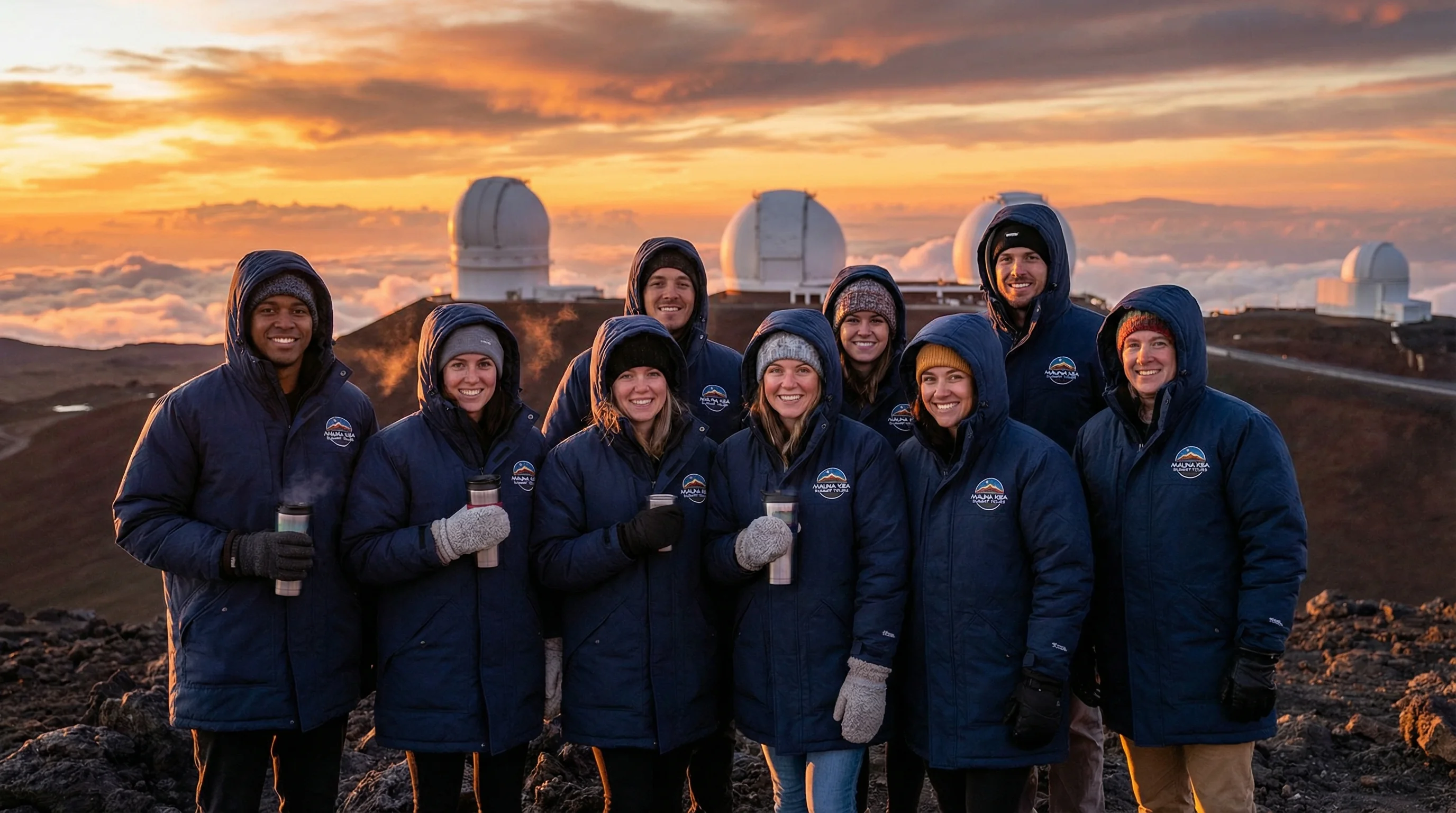
Sunset (time varies by season): Summit viewing (13,796 feet) where you’ll watch the sun sink below a sea of clouds while standing among the world’s most powerful telescopes. Temperatures can drop to 20-30°F with strong winds. Guides distribute warm parkas and gloves. This is the “wow” moment that makes summit tours special.
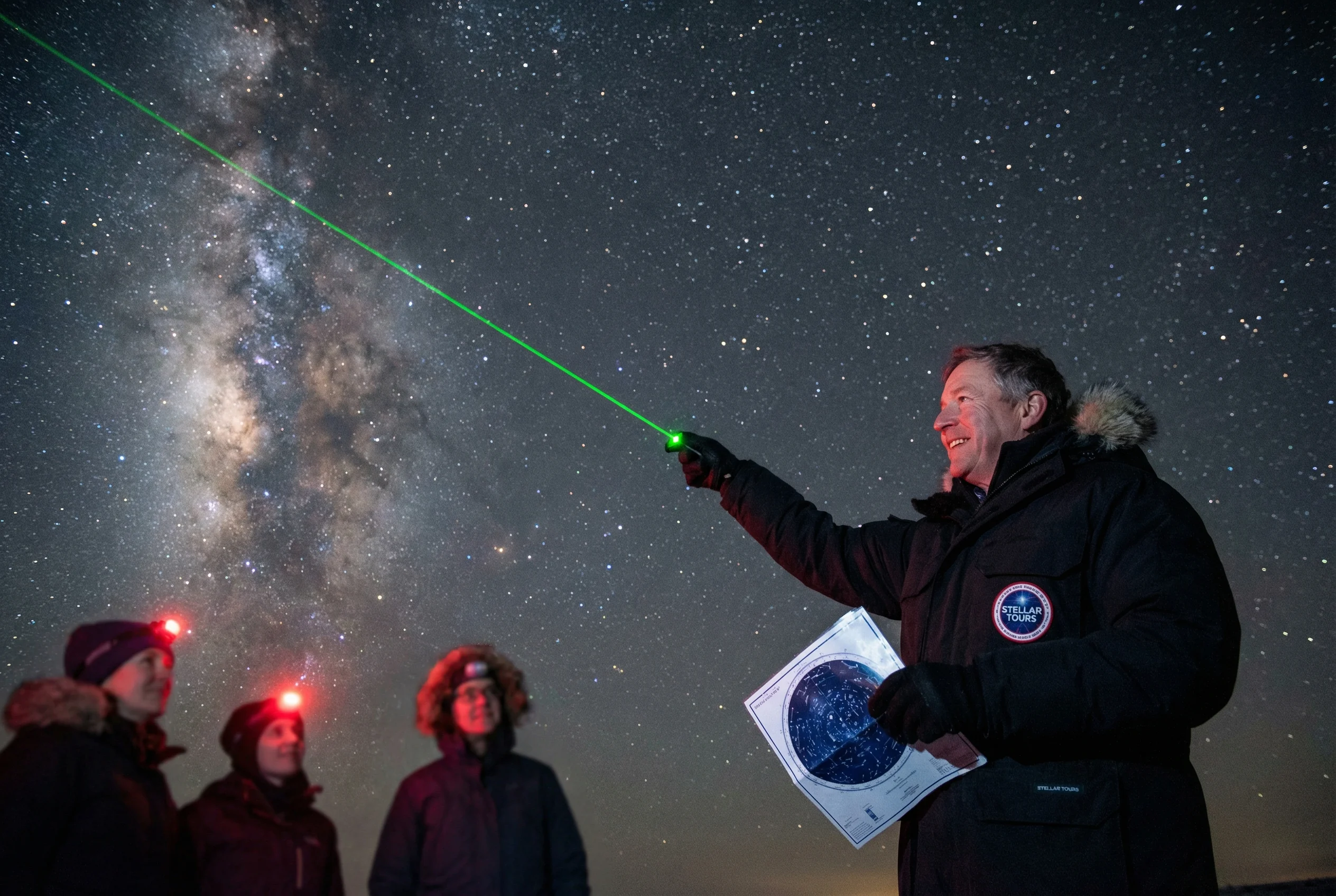
7:00-9:00 PM: Descent to stargazing location (usually around 9,200 feet near the Visitor Station). As twilight fades, your guides set up powerful telescopes and laser pointers to identify constellations, planets, star clusters, nebulae, and galaxies. You’ll take turns viewing celestial objects through the telescope while guides explain what you’re seeing and share Hawaiian star navigation stories.
9:30-11:00 PM: Return drive to your pickup location. Most guests are tired but exhilarated, processing one of the most memorable experiences of their Hawaii vacation.
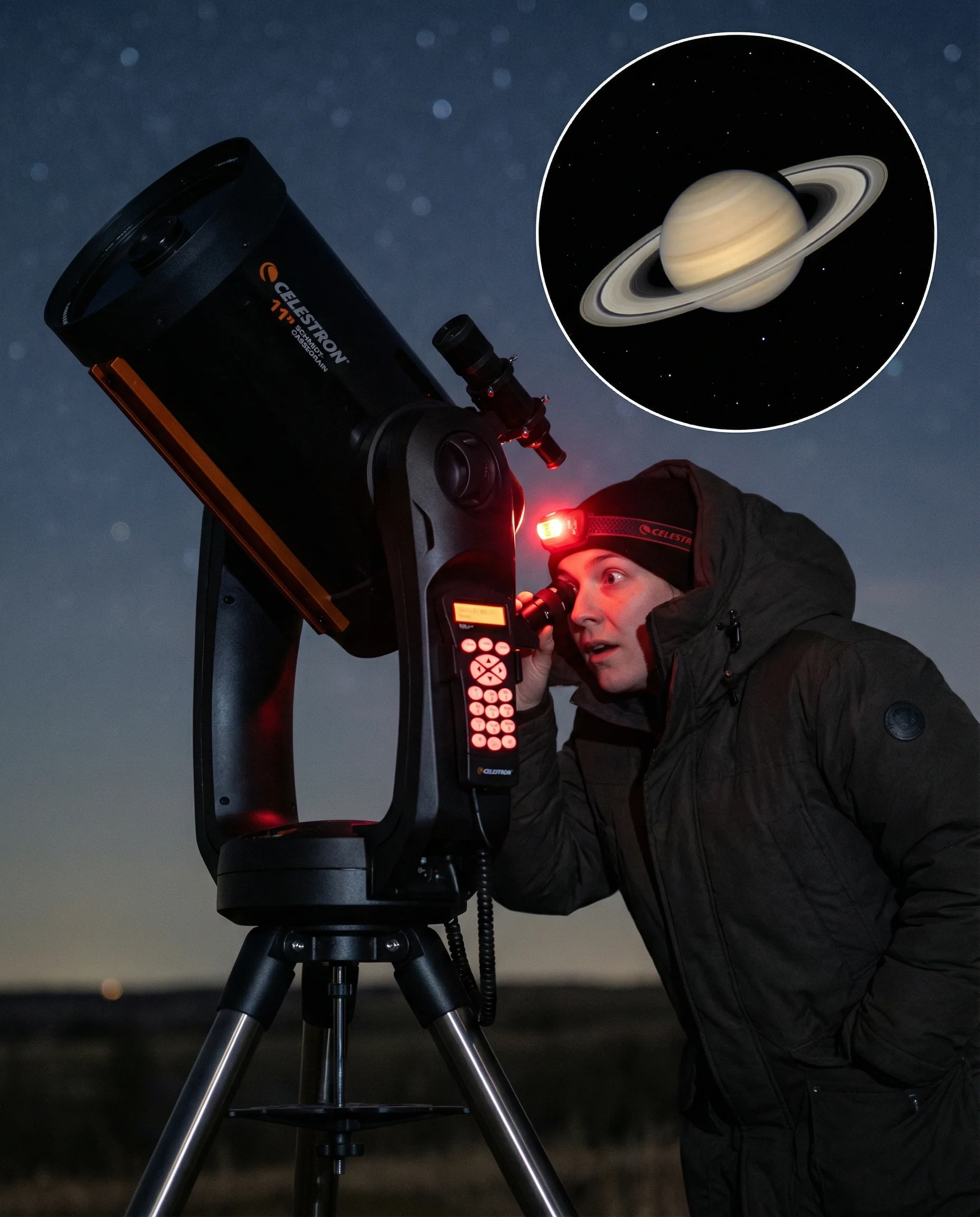
For stargazing-only tours, the experience is streamlined: pickup, drive to a dark-sky location on Mauna Kea’s slopes, immediate telescope viewing under pristine conditions, then return. Less time commitment, but equally impressive night sky views.
Prefer a worry-free first experience? Book our Mauna Kea Observatory Tour with expert guides, all equipment included, and a proven itinerary that’s introduced thousands of beginners to Hawaii’s astronomy paradise. From $289 per person with free cancellation up to 24 hours before your tour.
Understanding Costs and What’s Included
Tour prices vary by operator and experience type, but you can expect to invest $240-$330 per person for a quality Mauna Kea stargazing tour in 2026.
Typical Pricing
Summit sunset and stargazing tours (8-hour experiences) generally range from $250-$330 per adult:
- Premium operators like Hawaii Forest & Trail charge around $315 per person
- Mid-range options like our Observatory Tour start at $289 per person
- Budget-friendly alternatives like Arnott’s Adventures (Hilo-based) offer summit tours around $240
Stargazing-only tours (shorter, non-summit) tend to cost slightly less:
- KapohoKine’s Stellar Explorer: approximately $239 adults, $229 children
- Epic Tours’ 2-hour astrophotography stargazing: around $259 per person
Most summit tours don’t offer child discounts since they restrict participation to ages 13 and up. Lower-elevation tours that welcome children often provide modest child pricing.
What’s Included in the Price
Understanding what’s included helps you appreciate the value. Reputable tours provide:
- Professional 4WD transportation and expert drivers navigating steep, unpaved roads
- All necessary warm gear: hooded parkas, gloves, sometimes blankets
- High-quality telescopes (often computerized models worth thousands of dollars)
- Expert guides trained in astronomy and high-altitude safety
- Meals and beverages: dinner, hot chocolate, coffee, sometimes snacks
- Laser pointers for constellation identification
- Safety equipment: oxygen (for emergencies), first-aid supplies
- Photography assistance: guides often help capture photos of you with the Milky Way
- Cultural and scientific education: Hawaiian star navigation stories, modern astronomy facts
When you calculate the cost of renting 4WD vehicles, purchasing warm gear, obtaining professional telescopes, and hiring expert guides—not to mention the safety and convenience—the tour price represents excellent value. Plus, you’re supporting small businesses that have invested heavily in permits, training, and equipment.
Booking and Availability
Tours run year-round (weather permitting), but availability can be limited. The State of Hawaii strictly limits the number of commercial tour vehicles allowed on Mauna Kea each day to protect the mountain’s fragile environment. This means tours book up quickly, especially during peak seasons (summer and winter holidays).
Book as early as possible—ideally 2-4 weeks in advance. Many travelers report booking 12+ days ahead on average. Last-minute bookings are possible during slower periods, but availability is never guaranteed.
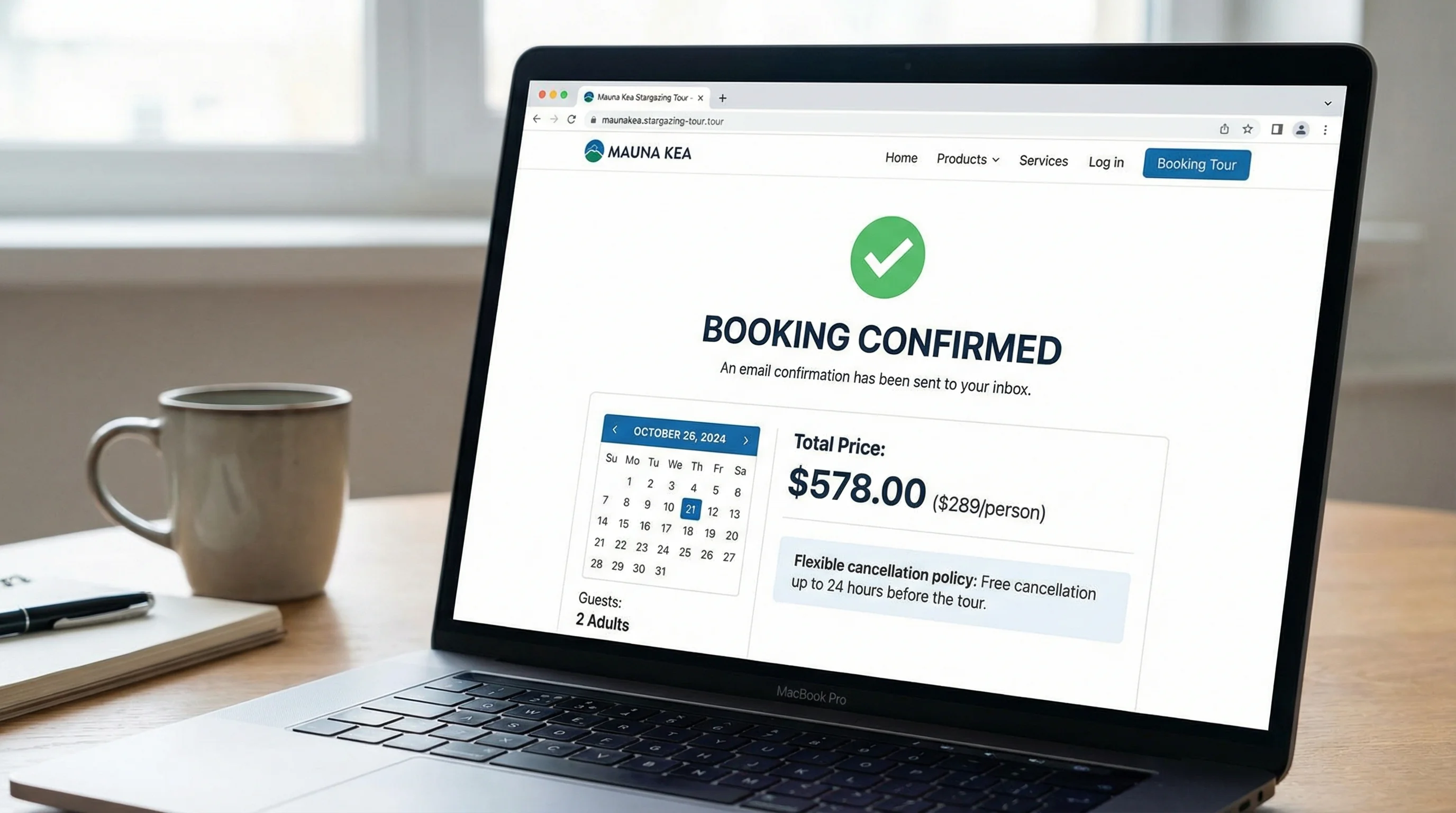
Most operators offer free cancellation up to 24-48 hours before your tour, giving you flexibility if weather looks poor or plans change. Tours may also cancel due to severe weather or unsafe conditions—reputable companies will offer rescheduling or full refunds in these cases.
Ready to secure your spot? Check availability and pricing for our Mauna Kea Observatory Tour—we offer transparent pricing, easy online booking, and flexible cancellation policies to make planning your first stargazing experience stress-free.
Preparing for Your Trip: What to Bring
Despite being in tropical Hawaii, Mauna Kea’s summit experiences freezing temperatures, strong winds, and intense UV radiation during the day. Proper preparation ensures comfort and safety.
Clothing and Layers
Essential clothing:
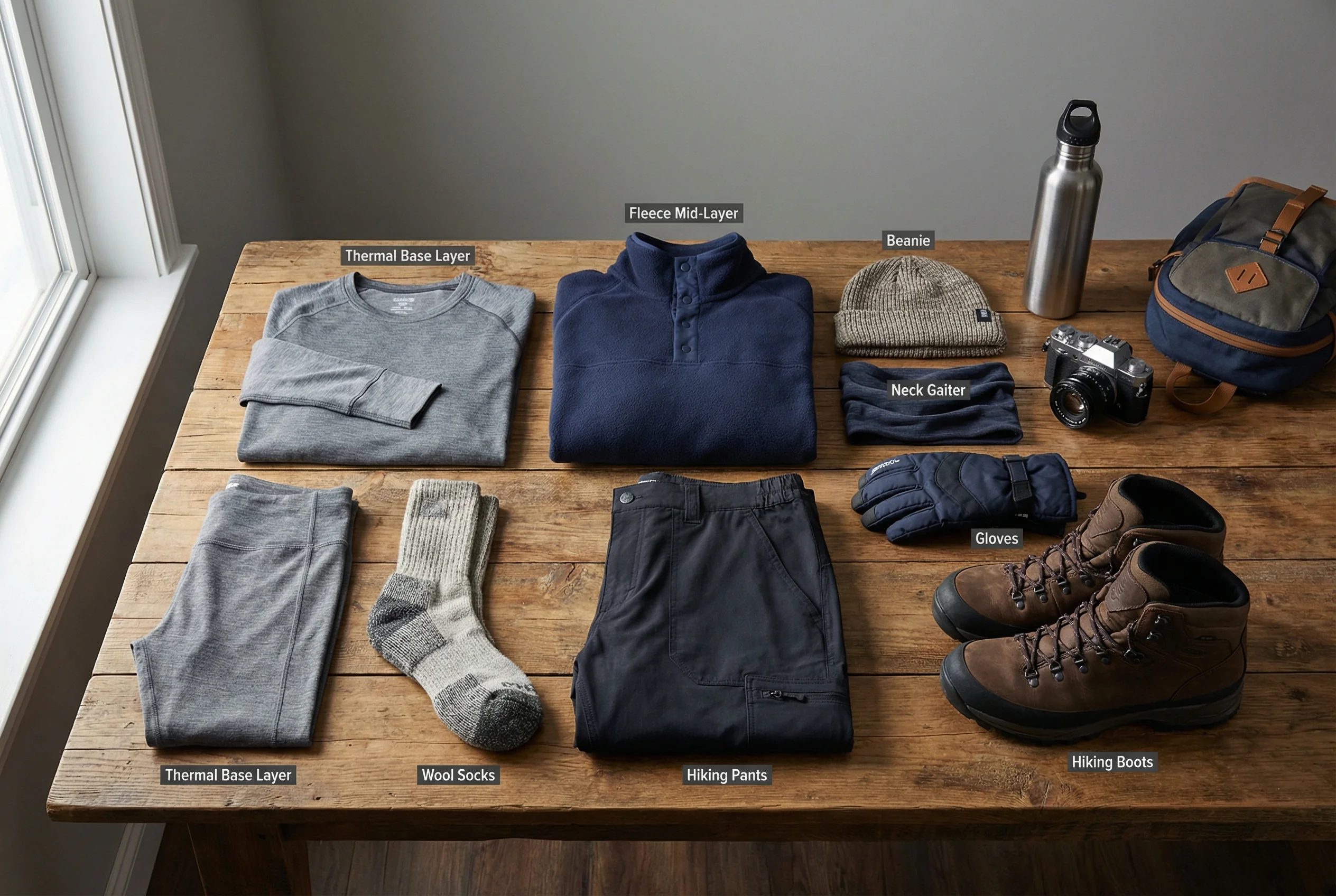
- Long pants (jeans, hiking pants, or thermal leggings)
- Closed-toe shoes: Sneakers or hiking boots with good traction
- Long-sleeve shirt and sweatshirt/fleece: Even though tours provide outer parkas, you need warm base and mid layers
- Warm socks: Consider wool or thermal socks; you can layer two pairs
- Hat/beanie: Significant heat escapes through your head
- Scarf or neck gaiter: Protects against cold winds
Tours provide hooded parkas and usually gloves, but having your own layers underneath is crucial. At sunset, temperatures at the summit can drop to 20-30°F with wind chill making it feel even colder. Think “winter outing in the mountains,” not “beach vacation in Hawaii.”
Pro tip: Wear layers you can adjust. The visitor station at 9,200 feet may be cool but comfortable, while the summit is legitimately cold. You’ll want to add layers going up and possibly remove some coming down.
Personal Items
Water and snacks: Bring a reusable water bottle—the high altitude is extremely dry and staying hydrated helps prevent altitude sickness. Tours provide water and hot beverages, but having your own is smart. Pack a few light snacks like energy bars or trail mix, especially if you tend to get low blood sugar. Tours include dinner, but having something to munch during the drive helps.
Camera and electronics: Bring your smartphone or camera to capture the sunset and stars. Fully charge all devices before departure—there’s no power on the mountain and cold temperatures drain batteries faster. Bring extra camera batteries and memory cards if you’re serious about photography. At night, phone cameras struggle with stars, but guides often help capture photos of you with the Milky Way using their equipment.
Sunglasses and sunscreen: The afternoon sun at 14,000 feet delivers intense UV radiation (you’re above 40% of the atmosphere). Wear sunglasses during the summit portion and apply sunscreen, even late in the day.
Health and Safety Items
Altitude considerations: If you’re prone to altitude sickness, consult your doctor before booking. Some people benefit from prescription medications like acetazolamide (Diamox). Avoid alcohol for 24 hours before your tour—it significantly worsens altitude effects.
If you’re prone to motion sickness, consider bringing Dramamine or ginger candy for the winding drive. Tour vehicles have good suspension, but the road has switchbacks and steep sections.
Medications and personal needs: Bring any prescription medications you require (inhalers, etc.). Guides carry oxygen and first-aid supplies for emergencies, but you should have what you need. If you have respiratory or heart conditions, check with your doctor about high-altitude activities.
Optional items: A lightweight headlamp or small flashlight with red light mode preserves your night vision during stargazing. If you own binoculars, they’re great for scanning the Milky Way or spotting observatories from the summit, though not required. Tours provide all the optical equipment you need.
What NOT to Bring
No alcohol: Alcohol is prohibited on tours and dangerous at high altitude. Even one drink can cause symptoms similar to severe altitude sickness.
No scuba diving: If you’ve been scuba diving, you must wait at least 24 hours before ascending to high altitude. The pressure changes can cause serious health issues. Most operators enforce this strictly.
Don’t overpack: You won’t need beach gear, multiple outfit changes, or heavy luggage. Keep it simple—layers, water, camera, personal items.
Bringing Children and Family Considerations
Whether your family can participate depends on your children’s ages and the specific tour type.
Age Restrictions on Summit Tours
Most summit tours restrict participation to ages 13 or 16 and older. The 13,796-foot summit has very low oxygen levels that can be dangerous for young children. Tour operators strictly enforce these limits for safety—even if your 12-year-old is tall or mature, they won’t be permitted on summit tours.
The age restriction isn’t arbitrary. Children’s bodies are more vulnerable to altitude sickness, and young kids may not be able to articulate symptoms before they become serious. Pregnant women are also typically prohibited from summit tours for similar safety reasons.
If you have teenagers (13+), summit tours are generally fine as long as they have no respiratory or heart conditions. Many families report that teens absolutely love the experience—the sunset above the clouds and views through the telescope create memories they’ll treasure forever. Just ensure teens dress warmly and take the acclimatization period seriously.
Family-Friendly Stargazing Options
If you have younger children, several excellent alternatives exist:
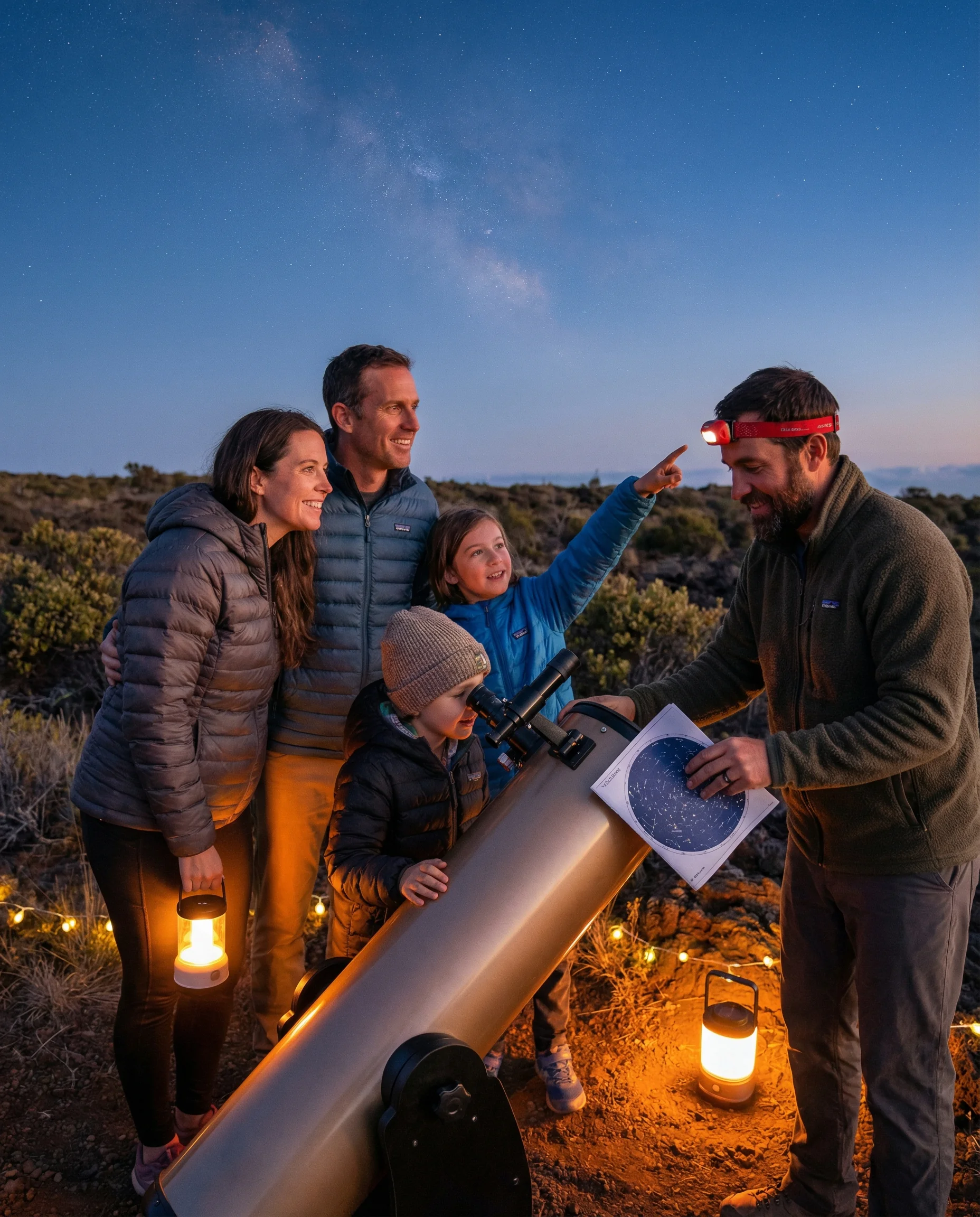
KapohoKine Adventures’ Maunakea Stellar Explorer explicitly welcomes “all ages” including young children. This tour skips the summit entirely, instead conducting solar viewing and nighttime stargazing at lower elevations (around 6,000-9,000 feet). The stargazing quality is still exceptional—you’re well above sea level and light pollution—without the extreme altitude risks. They offer child pricing ($229 vs. $239 for adults) and guides are experienced working with families.
Epic Tours’ stargazing experiences also allow all ages and last just 2 hours, making them ideal for families with shorter attention spans or bedtime concerns. They focus on intimate telescope viewing and astrophotography, creating a magical experience without the long commitment of summit tours.
Resort stargazing programs: Some Big Island resorts offer sea-level or low-elevation stargazing sessions suitable for young children. While not as dramatic as being on Mauna Kea’s slopes, they’re convenient and kid-friendly.
Preparing Children for the Experience
If bringing kids on a family-friendly tour:
- Dress them extra warm: Children feel the cold more intensely. Multiple layers, warm socks, hats, and gloves (even if the tour provides them, bring your own backups).
- Bring comfort items: A favorite blanket or stuffed animal can help during the van ride back if they get tired.
- Manage expectations: Explain beforehand that it will be cold and dark, but that they’ll see amazing things in the sky.
- Plan bathroom breaks: Facilities are limited on Mauna Kea. Make sure everyone uses restrooms at the Visitor Station.
- Pack patience: Kids might get restless during setup or long viewing sessions. Bring quiet activities for downtime (books, small toys).
Hot chocolate and cookies provided during stargazing are usually a big hit with kids and help keep them engaged.
Want to ensure your family chooses the right tour? Explore our tour options to find the perfect fit for your family’s ages and comfort levels. We can help you select between summit adventures for teens and lower-elevation stargazing for younger children.
Booking and Logistics
How to Book Online
You have several convenient booking options:
Direct booking through tour operator websites (often the best rates):
- Our site: Compare all Mauna Kea tour operators
- Operators’ official websites offer real-time availability and sometimes direct-booking discounts
Tour aggregator platforms:
- Viator/TripAdvisor
- GetYourGuide
- Expedia
- Hotel concierge booking services
These platforms let you compare options and read reviews, though they may add small service fees. Most offer “lowest price guarantees” and flexible cancellation policies.
Book early: As mentioned, tours fill up fast. Secure your spot 2-4 weeks in advance if possible, especially during peak seasons (June-August, December-January).
Pickup Locations and Transportation
Most tours include transportation from convenient meeting points:
West side (Kona/Waikoloa): Major operators pick up from central hotels and resorts:
- Kailua-Kona locations (Courtyard King Kamehameha’s Kona Beach Hotel, downtown meeting points)
- Waikoloa Beach Resort (Queen’s Marketplace)
- Waikoloa Village shopping centers
East side (Hilo): Hilo-based operators like Arnott’s Adventures pick up from Hilo hotels (Banyan Drive hotel area, downtown locations).
Mid-mountain option: Most tours also allow you to meet at the Onizuka Visitor Information Station (9,200 feet) if you’re driving yourself partway up or coming from the opposite side of the island.
If you’re staying at a major resort in these areas, pickup is essentially door-to-door. If you’re in a rental home or smaller accommodation, you may need to drive to the nearest meeting point (parking is usually available).
One of the biggest advantages of booking a tour: You don’t have to navigate the difficult mountain roads yourself at night. The Mauna Kea summit road is steep, unpaved, and requires 4WD—and driving it in the dark after a long day is legitimately dangerous. Let the professionals handle it while you relax and enjoy the experience.
Cancellation Policies
Reputable operators offer flexible cancellation:
- 24-48 hours notice: Most tours allow free cancellation or rescheduling with at least 24-48 hours notice
- Weather cancellations: If the operator cancels due to dangerous weather, you’ll receive a full refund or opportunity to reschedule
- Medical emergencies: Some operators accommodate last-minute cancellations due to illness or injury (check specific policies)
Always read the cancellation terms when booking. Third-party platforms (Viator, etc.) will display their cancellation cutoffs clearly.
Weather on Mauna Kea can be unpredictable—occasional storms, high winds, or rare snow events may force cancellations. While disappointing, safety must come first. Operators with decades of experience know when conditions are unsafe, and they’ll work with you to reschedule or refund.
Reading Reviews and Making Your Final Decision
Before booking, take time to read recent reviews from first-time visitors like yourself.
Where to Find Reviews
TripAdvisor/Viator: The most comprehensive source of traveler reviews. Look for tours with hundreds of reviews and ratings above 4.5 stars. For example, well-established tours often have 1,000+ reviews with detailed write-ups about guide quality, equipment, and overall experience.
Pay attention to recent reviews (2025-2026) since tours sometimes change guides, vehicles, or itineraries. Recent feedback gives you the most accurate picture of what to expect.
Google Reviews: Search for the tour company name (e.g., “Hawaii Forest & Trail reviews”) to find Google Maps reviews and ratings.
Tour operator websites: Many display testimonials and ratings directly on their sites.
What to Look For in Reviews
Consistent themes matter more than individual outliers. Look for:
- Guide quality: Are guides knowledgeable, friendly, attentive to guests’ comfort?
- Equipment: Are the telescopes powerful and well-maintained? Are parkas warm enough?
- Safety: Do guides monitor guests for altitude sickness? Is driving safe?
- Weather handling: How does the company handle cancellations or partial cloudiness?
- Value: Do guests feel the experience justified the cost?
Common complaints in even the best-rated tours usually involve weather (cloudy nights) or individual guests experiencing altitude sickness—factors beyond the operator’s control. Red flags would be consistent complaints about unprofessional guides, unsafe vehicles, or poor communication.
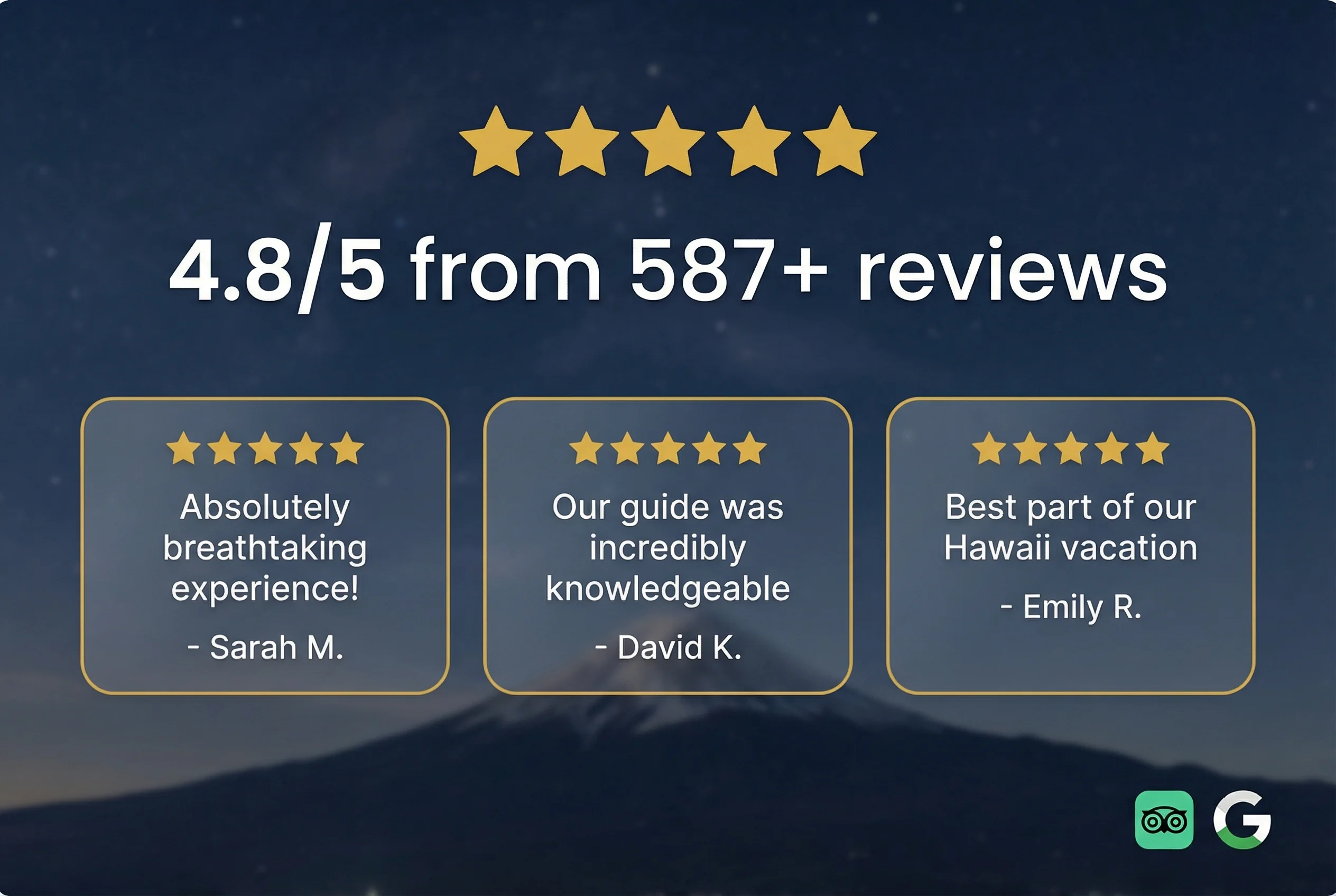
Our Mauna Kea Observatory Tour maintains a 4.8-star rating across 641+ reviews, with first-timers consistently praising the knowledgeable guides, comprehensive equipment, and magical sunset-to-stars experience. Read our guest testimonials to see why thousands of beginners trust us with their first Mauna Kea adventure.
Trust Your Research
By this point, you’ve learned:
- What makes Mauna Kea special for stargazing
- The difference between summit and lower-elevation tours
- What to expect during a typical tour
- How much to budget and what’s included
- How to prepare with appropriate clothing and gear
- Which tours work for families with children
- How booking and logistics work
You’re ready to make an informed decision. Choose the tour that fits your comfort level, budget, and family situation—then book with confidence knowing you’ve prepared thoroughly.
Final Tips for First-Timers
Stay flexible with weather: Mauna Kea generally enjoys clear skies 300+ nights per year, but occasional storms happen. If your tour is rescheduled due to weather, it’s because conditions are genuinely unsafe. Trust the professionals.
Embrace the altitude: The acclimatization stop isn’t optional or a “break”—it’s a crucial safety measure. Relax, eat your dinner, hydrate, and let your body adjust. Don’t rush around or exert yourself. If you start feeling dizzy, nauseous, or short of breath, tell your guide immediately.
Ask questions: Your guides are passionate about astronomy and Hawaiian culture. Don’t hesitate to ask about constellations, Hawaiian navigation, telescope operation, or anything else you’re curious about. Guides love engaging with interested guests.
Manage your expectations around photography: While the night sky is breathtaking to your eyes, smartphone cameras struggle with low light. Don’t spend the entire stargazing session fiddling with your phone. Enjoy the visual experience, let guides help you capture a few photos, and trust that the memory will be even more vivid than any image.
Arrive on time: Tours run on tight schedules to reach the summit for sunset. Late arrivals can cause the entire group to miss the best lighting. Confirm your pickup time and location, and be ready 5-10 minutes early.
Bring patience and wonder: Some nights are clearer than others. Sometimes the Milky Way is jaw-droppingly bright; other nights it’s more subtle. Planets move through the sky seasonally—you might see Saturn’s rings or Jupiter’s moons, depending on timing. Meteor showers happen on specific dates. Every night on Mauna Kea is unique, but every night is special. Embrace whatever the universe offers during your visit.
Ready to Experience Mauna Kea?
You now have everything you need to confidently plan and enjoy your first Mauna Kea stargazing adventure. From understanding tour types and costs to packing the right gear and preparing for altitude, you’re ready to make informed decisions and have an unforgettable experience under Hawaii’s darkest skies.
Thousands of first-time visitors discover the magic of Mauna Kea’s night sky every year. Many describe it as a life-changing experience—the moment they realized how vast and beautiful the universe truly is. Whether you’re watching Saturn’s rings come into focus through a telescope, seeing the Milky Way stretch horizon to horizon, or simply standing above the clouds as the sun sets, Mauna Kea delivers moments you’ll remember forever.
Popular Choice for First-Timers:
Our Mauna Kea Observatory Tour includes everything beginners need for a worry-free experience:
- Expert astronomer guides with 10+ years experience
- Summit sunset above the clouds (13,796 feet)
- Professional telescope viewing of planets, galaxies, nebulae
- All warm gear provided (hooded parkas, gloves)
- Dinner and hot beverages included
- Small group sizes (maximum 14 guests)
- 4WD transportation with experienced drivers
- Free professional Milky Way photos
- Flexible cancellation up to 24 hours
From $289 per person | Duration: 8 hours | Ages 13+ | Pickup from Kona/Waikoloa
⭐ 4.8/5 stars from 641+ first-time stargazers
Check Availability & Book Your Tour →
View All Stargazing Tour Options →
Whether you choose a summit adventure or lower-elevation stargazing, you’re about to experience one of the most incredible nights of your life. Clear skies and unforgettable memories await on Mauna Kea!